
POSTECH Develops High-Entropy Alloy for Extreme Temperature Applications
Written with artificial intelligence.
Researchers at POSTECH have created a high-entropy alloy that remains strong and ductile from −196°C to 600°C, eliminating the need for post-printing heat treatment. This alloy could be crucial for use in cryogenic storage and aerospace applications.
Breakthrough in Alloy Development
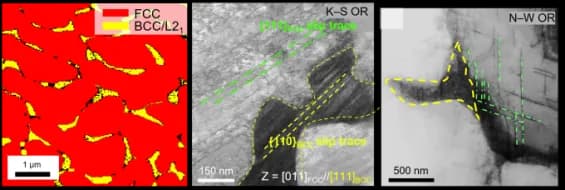
A research team from POSTECH has developed a high-entropy alloy capable of maintaining impressive mechanical properties across a wide temperature range, from −196°C to 600°C. This innovation was made possible through advanced 3D printing techniques, specifically laser powder bed fusion (LPBF), which allowed the formation of a unique microstructure without requiring additional heat treatment.
Key Features of the Alloy
The alloy is composed of eight elements: cobalt, chromium, iron, nickel, aluminum, titanium, vanadium, and tantalum. The microstructure formed during the 3D printing process includes a network of precipitates that enhances both strength and ductility. Notably, the alloy achieved a yield strength exceeding 1 gigapascal (GPa) and a uniform elongation of 19–26% at various temperatures, demonstrating its resilience under extreme conditions.
Implications for Industrial Use
This research is significant as it suggests a reduction in the need for traditional heat treatment processes in manufacturing. However, further testing is required to confirm the alloy's performance in larger components and its durability under conditions of repeated loading and prolonged high temperatures. Professor Hyung Seop Kim emphasized the need for additional verification to facilitate practical applications in industries such as aerospace and cryogenic storage.