
3D-Printed Lung Model Advances Pulmonary Embolism Imaging Techniques
Written with artificial intelligence.
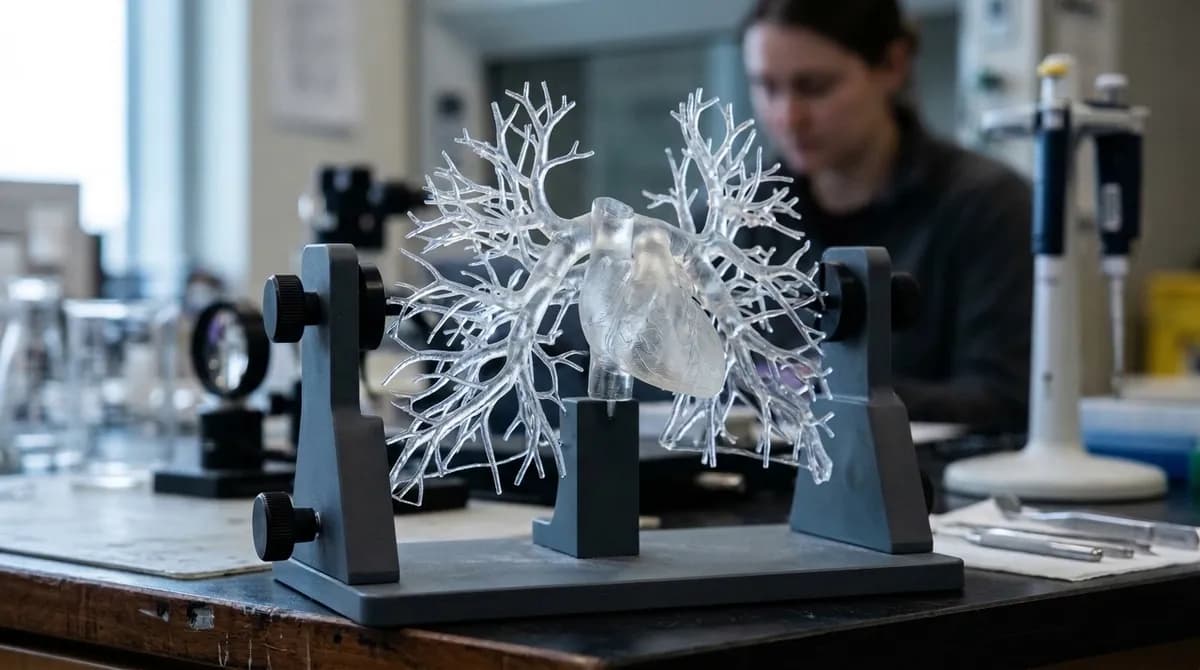
Researchers have developed a customizable 3D-printed lung phantom that accurately simulates pulmonary embolism conditions for evaluating various clinical imaging methods. This innovation aims to improve diagnostic accuracy across modalities such as CT and nuclear medicine techniques.
Introduction to the 3D-Printed Lung Phantom
Researchers have created a highly realistic, watertight 3D-printed lung model designed to replicate pulmonary embolism conditions. Published in 3D Printing in Medicine, this lung phantom supports the evaluation of diagnostic imaging techniques used in clinical settings.
Significance of the Study
Accurate diagnosis of pulmonary embolism relies on multiple imaging modalities, including planar scintigraphy, positron emission tomography (PET), and computed tomography (CT). The study's goal was to establish a reliable method for comparing these modalities to enhance the assessment of the pulmonary vascular obstruction index, a critical measure linked to disease recurrence.
Design and Manufacturing of the Model
The researchers engineered a lung model with a 5% pulmonary vascular obstruction index, leveraging a CT scan of a healthy lung for anatomical accuracy. The phantom was constructed using selective laser sintering with Nylon 12 powder, ensuring complete watertightness necessary for imaging procedures.

Validation and Results
The model underwent rigorous evaluations based on geometric consistency, density, multi-modality imaging, motion management, and cost. It produced realistic diagnostic images across all tested modalities, confirming its effectiveness. Notably, the total production cost remained under one thousand euros, highlighting its affordability for research and clinical applications.
Conclusion
This 3D-printed lung phantom represents a significant advancement in medical imaging technology, providing a dependable framework for testing and improving diagnostic methods for pulmonary embolism.