
MIT Develops X-Hinges Software for Interactive 3D Printing
Written with artificial intelligence.
MIT's Computer Science and Artificial Intelligence Laboratory has introduced X-Hinges, a software that enables the creation of 3D-printed objects responsive to touch. This innovation allows for the integration of different materials, enhancing the functionality of everyday items.
Introduction to X-Hinges
Engineers at MIT's Computer Science and Artificial Intelligence Laboratory (CSAIL) have developed a new design software named X-Hinges. This tool enables users to create and 3D print objects with touch-responsive capabilities, thanks to the inclusion of built-in sensors that react to human interaction.
How X-Hinges Works
A common challenge in integrating sensors into 3D-printed objects is the interference caused by using the same material for both the sensors and the object. X-Hinges addresses this by allowing the use of two distinct filaments: one optimized for sensor signal transmission and another for conductive traces. This separation reduces errors and improves communication between components.
User-Friendly Design Features
The software is designed for accessibility, allowing users to construct objects using various geometric shapes and define movements along three axes—compression, vertical, and horizontal. This flexibility means objects can exhibit multiple types of motion.
Practical Applications and Future Goals
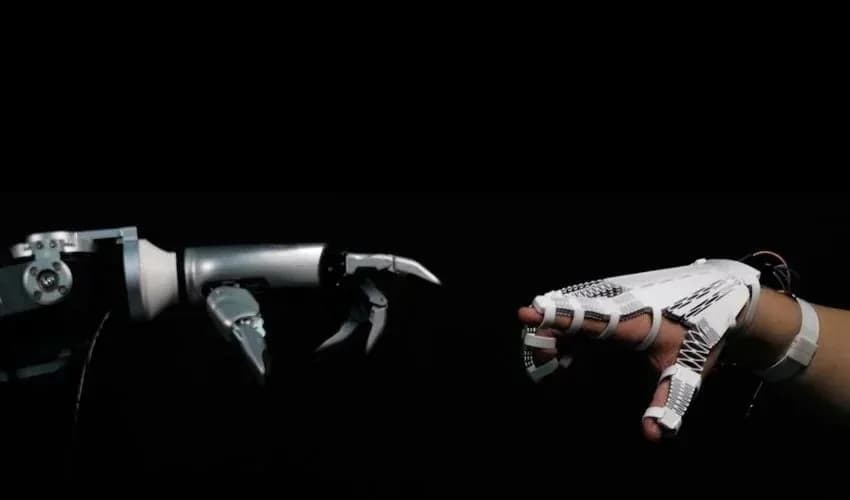
Initial projects using X-Hinges have yielded promising results, including a glove that translates finger movements to a robotic hand and a foldable lamp that adjusts brightness in response to touch. However, the team is currently working on calibration issues that arise from variations in electrical component layouts in identical prints. The ultimate goal is to integrate calibration directly into the printing process, merging actuation and sensing capabilities into a single fabrication method, thereby paving the way for advanced applications in embodied intelligence and AI.