
The Impact of 3D Printing on Denture Production
Written with artificial intelligence.
A five-year study highlights the advantages of 3D-printed dentures, including faster production, lower costs, and improved comfort for patients. This shift from traditional milling methods could revolutionize dental care accessibility.
Advancements in Denture Production
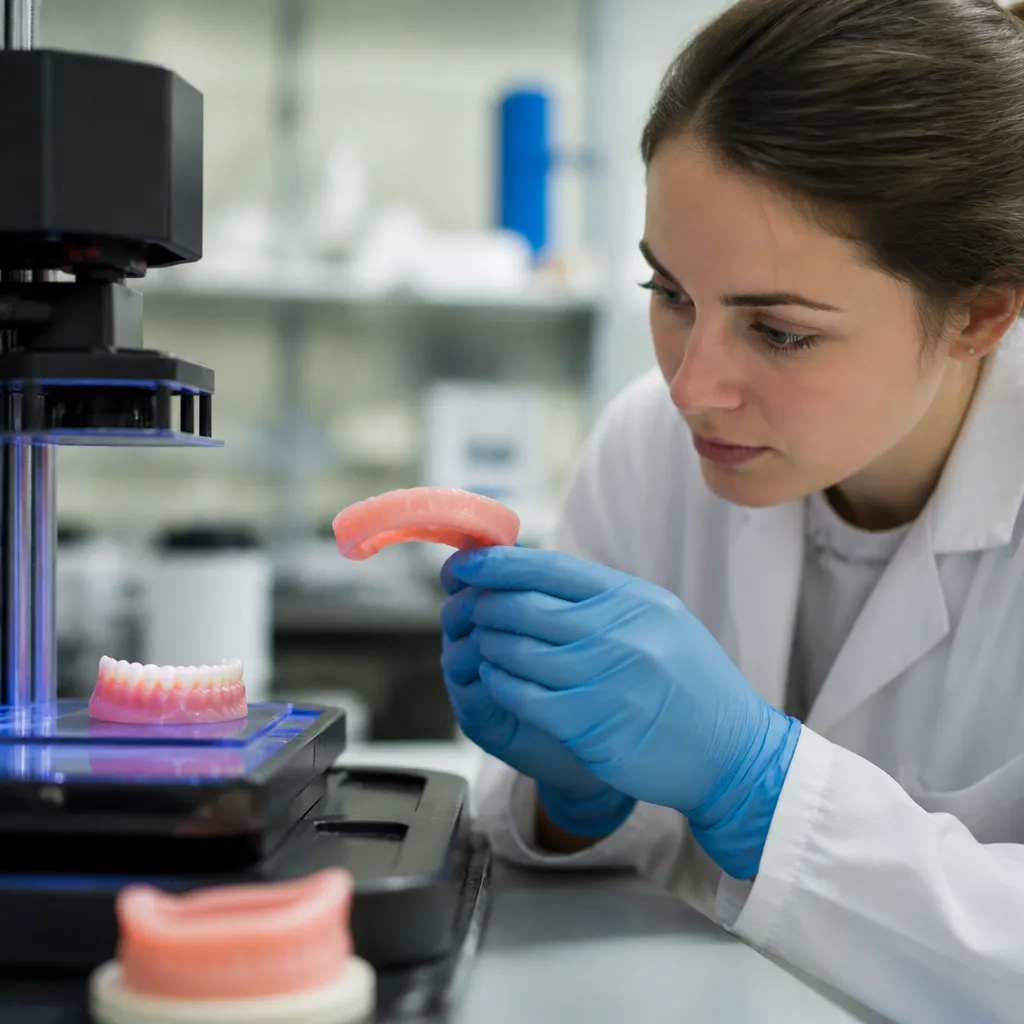
Recent research indicates that 3D printing is transforming the production of dentures by making the process faster, more affordable, and more comfortable for patients. Traditionally, denture creation relied on milling machines, but dental labs are increasingly adopting 3D printing technology.
Benefits of 3D Printing
According to Vivia Sequeira, a clinical assistant professor at the UNC Adams School of Dentistry, the key advantages of 3D-printed dentures include:
- Cost-Effectiveness: 3D-printed resins are significantly cheaper than traditional milled materials.
- Scalability: A single 3D printer can produce multiple dentures simultaneously, unlike milling machines that handle one denture at a time.
Initial findings suggest that the performance of 3D-printed dentures matches that of milled ones, although a comprehensive five-year study is underway to evaluate long-term metrics such as accuracy, wear resistance, and common issues like material fractures.
Improving Patient Comfort
Patient comfort is paramount, and both 3D printing and milling offer high accuracy in replicating patient molds. The precise fit of 3D-printed dentures can lead to fewer adjustment appointments and a smoother experience for both new wearers and those dissatisfied with traditional dentures. Sequeira notes that this translates to lower rates of additional visits and a quicker adaptation period.
Accessibility for Underserved Communities
As more clinics adopt digital workflows and 3D printing technology, the potential for increased accessibility to quality dental care grows. The study suggests that as trust in these methods develops, production costs will decrease, making dental care more available in underserved areas. Many dental practices are already investing in multi-purpose 3D printing equipment, which not only enhances the patient experience by reducing turnaround times but also allows for the production of various dental appliances on-site.