
Gränges Develops Advanced Aluminium Alloys for 3D Printing in Industrial Applications
Written with artificial intelligence.
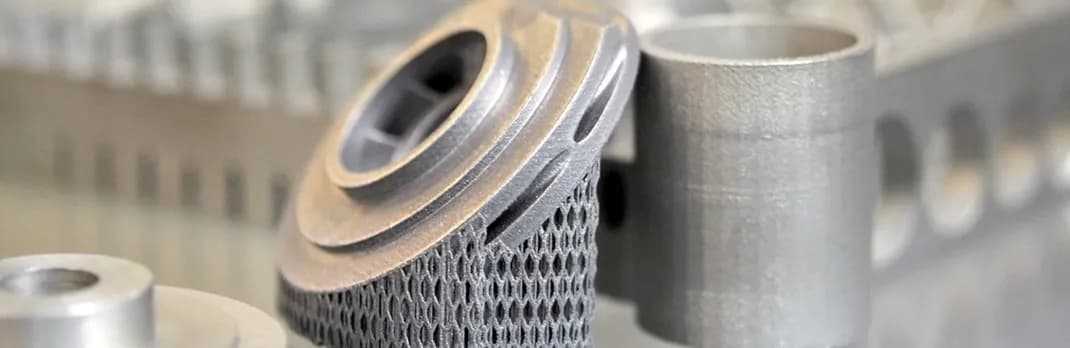
Gränges Powder Metallurgy is collaborating with Pint and IRT M2P to create two new aluminium-scandium alloys designed for Laser Powder Bed Fusion 3D printing. These materials aim to meet the high-performance demands of industries, with initial demonstrators expected by 2027.
Collaboration on Advanced Alloys
Gränges Powder Metallurgy (GPM), part of the Swedish manufacturer Gränges, is partnering with metal component specialist Pint and the French research institute IRT M2P to develop two specific aluminium-scandium alloys for Laser Powder Bed Fusion (LPBF) 3D printing. The first alloy, Al-Si-Sc, is intended for high-temperature applications, while the second, Al-Mg-Sc, targets components that must function in hydrogen environments between 100°C and 250°C.
Development Progress
Both alloys are currently undergoing material production and processing trials. GPM and its partners anticipate that the first demonstrator components will be ready in 2027. The Al-Si-Sc alloy focuses on enhancing thermal stability and dimensional accuracy, building on GPM's experience with hypereutectic aluminium-silicon alloys. Meanwhile, the Al-Mg-Sc alloy aims to improve fatigue resistance for hydrogen-exposed applications.

Testing and Industrial Interest
The development process includes extensive material testing, with results from the Al-Si-Sc alloy suggesting promising LPBF processing capabilities. Discussions with potential industrial users, particularly in the defence and automotive sectors, indicate significant interest in lightweight components that maintain stability at high temperatures. The Al-Mg-Sc alloy is supported by an unnamed partner in the energy sector as it moves toward printing trials in late 2026 and qualification by early 2027.
Addressing Geopolitical Concerns
Both projects reflect ongoing challenges related to the adoption of scandium in aluminium alloys, particularly due to geopolitical supply issues. However, new sources of scandium in Canada offer hope for future availability. As GPM and its partners continue their development efforts, they aim to meet the evolving needs of the transportation, energy, and advanced engineering sectors, with the prospect of producing advanced materials that are both reliable and effective in demanding conditions.