
Jinqi Toys Transforms Production with 2,300 Multi-Color 3D Printers
Written with artificial intelligence.
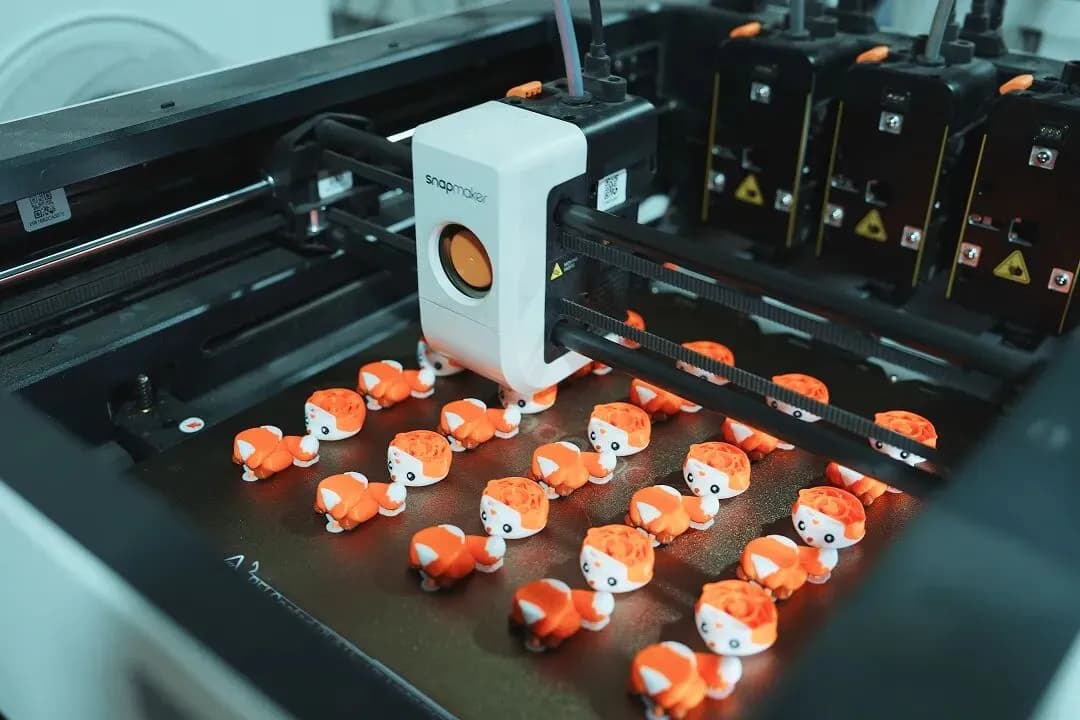
Chinese toy manufacturer Jinqi Toys has deployed approximately 2,300 Snapmaker U1 3D printers, significantly increasing its multi-color product output. This shift has propelled multi-color sales from about 5% to over 50% of total revenue within a year, highlighting the economic advantages of reduced waste and faster production times.
Jinqi Toys' Innovative Shift
Jinqi Toys, a Chinese toy manufacturer, has made a notable advancement in its production capabilities by installing around 2,300 Snapmaker U1 3D printers. This transition aims to enhance multi-color production, which has skyrocketed from 5% to over 50% of the company's sales revenue in less than a year.
Economic Benefits of Multi-Color Printing
The company previously operated 300 single-head 3D printers that faced challenges with material waste and production delays. Each switch in filament not only slowed down the process but also generated waste that negatively impacted profit margins. Adopting the Snapmaker U1 printers, which utilize four independent printheads to eliminate the need for filament flushing, has significantly reduced waste. Jinqi Toys estimates savings of RMB 2,000 to 3,000 (approximately $299 to $448) per machine annually on consumables.

Design Flexibility and Production Capabilities
The enhanced reliability of the U1 printers has also expanded the design possibilities for Jinqi Toys. Previously limited to about 30-40 color changes per product due to the constraints of older machines, the new system allows for 400-500 color changes, enabling the exploration of complex designs such as multi-tone combinations and gradients.
Competitive Landscape
This strategic move comes amid competitive pressures in China's print farm economy, where pricing pressures are evident. Jinqi Toys' pivot to multi-color production may provide a competitive edge, but the future of this advantage remains uncertain as other farms may also adopt similar technologies. The company's experience highlights the potential economic benefits of investing in advanced 3D printing technology.