
Advancements in 3D-Printed Metal Implants: A New Review Highlights Integration for Bone-Matching Prosthetics
Written with artificial intelligence.
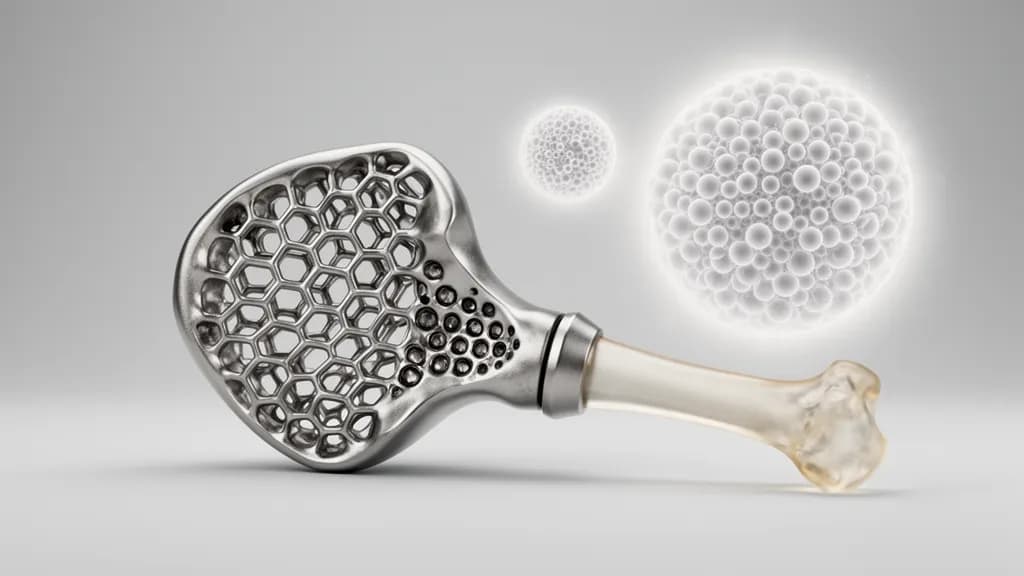
A recent review in Frontiers in Mechanical Engineering emphasizes the need for an integrated approach in the design of metallic implants. By focusing on the interplay between materials, structure, and surface engineering, researchers aim to mitigate issues related to implant stiffness and enhance clinical outcomes.
Integrated Design Approach for Metal Implants
For many years, the focus in developing metal implants has been solely on maximizing strength. However, a new review suggests that the future of these implants lies in a holistic approach that considers various engineering factors together. Authored by M. Mutharasu and J. Joel from the School of Mechanical Engineering at the Vellore Institute of Technology, the review proposes a framework that unifies material selection, architectural design, and surface chemistry, aiming to address the mismatch between stiff metal implants and the natural properties of bone.
Addressing Mechanical Discrepancies
Human bones exhibit different properties, with cortical bone being significantly denser than trabecular bone. Traditional metal implants, such as titanium alloys, are far stiffer than bone, which leads to complications like stress shielding. The review advocates for the use of topology-optimized lattice structures that can lower the stiffness of implants to match that of bone, suggesting porosity levels between 50% and 85% for effective integration.
Material Innovations
The landscape of materials is evolving, with titanium alloys still leading the field for their strength and corrosion resistance. However, the review highlights new beta-phase titanium compositions that can reduce stiffness and improve compatibility with bone. Additionally, magnesium alloys are noted for their biodegradable properties, although they present risks of rapid corrosion. The review also discusses advancements in surface coatings, including hybrid materials that enhance the bioactivity of implants.
Manufacturing and Quality Control
The review points out that the manufacturing process itself can introduce defects that affect the performance of implants. Wear and tear on 3D printing machines can lead to inconsistencies that must be addressed to ensure the reliability of the final product. A robust quality control framework that accounts for these factors is essential for the clinical success of metal implants.
Overall, this comprehensive review underscores the importance of an integrated approach in the design and manufacturing of 3D-printed metal implants, which could lead to significant improvements in patient outcomes.