
University of Waterloo Develops Effective 3D Printed Microplastic Filter
Written with artificial intelligence.
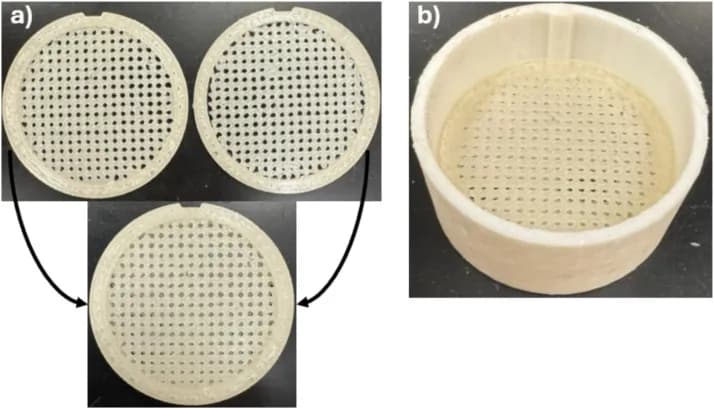
Researchers at the University of Waterloo have created a 3D printed water filtration system using biodegradable materials that can remove 90% of microplastics from contaminated water. This innovative design employs multiple capture mechanisms to enhance filtration efficiency.
Innovative Water Filtration
Researchers from the University of Waterloo have unveiled a 3D printed water filtration column made from biodegradable plastic, capable of removing 90% of microplastics from contaminated water using gravity alone. This system integrates advanced surface engineering and adhesive coatings to enhance its capturing ability, particularly for microplastics smaller than 10 micrometers.
Design and Efficiency Enhancements
The filtration system comprises circular discs measuring 39 mm in diameter, printed with an offset grid featuring 1 x 1 mm holes. The researchers first tested smooth PLA filters, which yielded only 16% microplastic removal efficiency. To enhance performance, they modified the surface by adding polyethylene glycol during the printing process, resulting in roughened textures that improved capture efficiency to 37% when tested with eight filters.
Further modifications introduced an acrylic adhesive coating, which led to a maximum removal rate of 51% when using eight filters. Notably, when the number of stacked filters was increased from eight to twenty, the removal efficiency surged to 90%, indicating that more layers could potentially enhance the performance further.
Limitations and Future Research
Despite these promising results, the system's effectiveness has not yet been tested in real-world wastewater scenarios, and its long-term durability remains uncertain. The researchers highlighted that the filtration tests utilized polystyrene beads, which do not fully represent the complexities of environmental microplastic contamination. The study, titled "3D printed, flow-through water filters for microplastic capture: The effect of surface porosity, column height, and pressure-sensitive adhesives on removal efficiency," was conducted by Ethan A. Crawford and Tizazu H. Mekonnen. This research opens avenues for future exploration into more reliable and sustainable water filtration methods.