
The Role of AI in CAD for 3D Printing: Opportunities and Limitations for Small Businesses
Written with artificial intelligence.
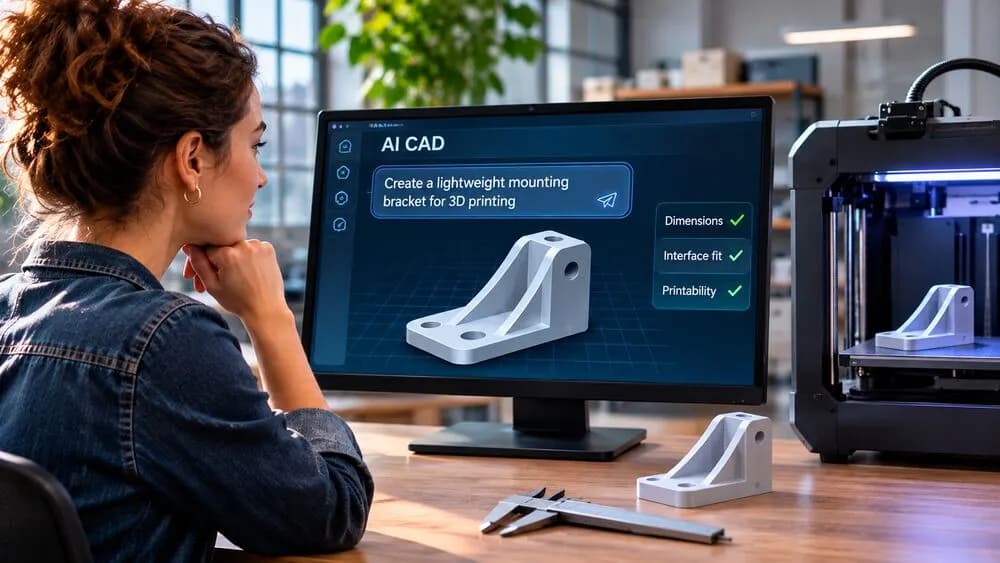
AI-assisted CAD tools are emerging as a means to facilitate 3D printing for small businesses by simplifying model creation. However, a report from IDTechEx emphasizes the need for thorough design validation, especially for functional parts, to ensure commercial viability.
AI Tools Simplifying CAD
AI-driven computer-aided design (CAD) tools are making strides in helping small businesses adopt 3D printing by easing the creation and modification of digital models. This shift allows users to interact with CAD software using natural language, making it easier to translate ideas into printable models. Despite these advancements, an analysis from IDTechEx highlights the persistent need for rigorous design validation, particularly when generating functional components.
Challenges of Design Validation
While affordable desktop printers enable small businesses to gradually scale their production capabilities, access to such hardware does not eliminate the necessity for skilled CAD work. A business may have printing capacity but might lack the expertise to design the products they wish to manufacture. IDTechEx's insights suggest that the commercial success of AI in this realm hinges on its ability to reduce design efforts while ensuring that essential validation processes are still in place.
The Importance of Usable Outputs
The distinction between visually appealing models and those that meet functional requirements is crucial. For example, if a model appears convincing but lacks accurate dimensions or necessary features, it may ultimately fail in its intended purpose. A recent exercise by IDTechEx, which involved generating Open Scad code for a screwdriver handle, demonstrated the variability in results and the importance of functional accuracy in design submissions.
Future Implications
The potential of AI-assisted CAD extends beyond initial design generation. Effective geometry preparation, including mesh repair and build orientation, is vital for achieving high print quality. AI tools can assist in these processes, but their effectiveness will depend on the application and the specific printing conditions. Continuous feedback between design generation and evaluation will be essential to ensure that models meet the required specifications before moving into production.