
Swiss-Polish Team Achieves High Density in 3D Printed Aluminium without Solvent Bath
Written with artificial intelligence.
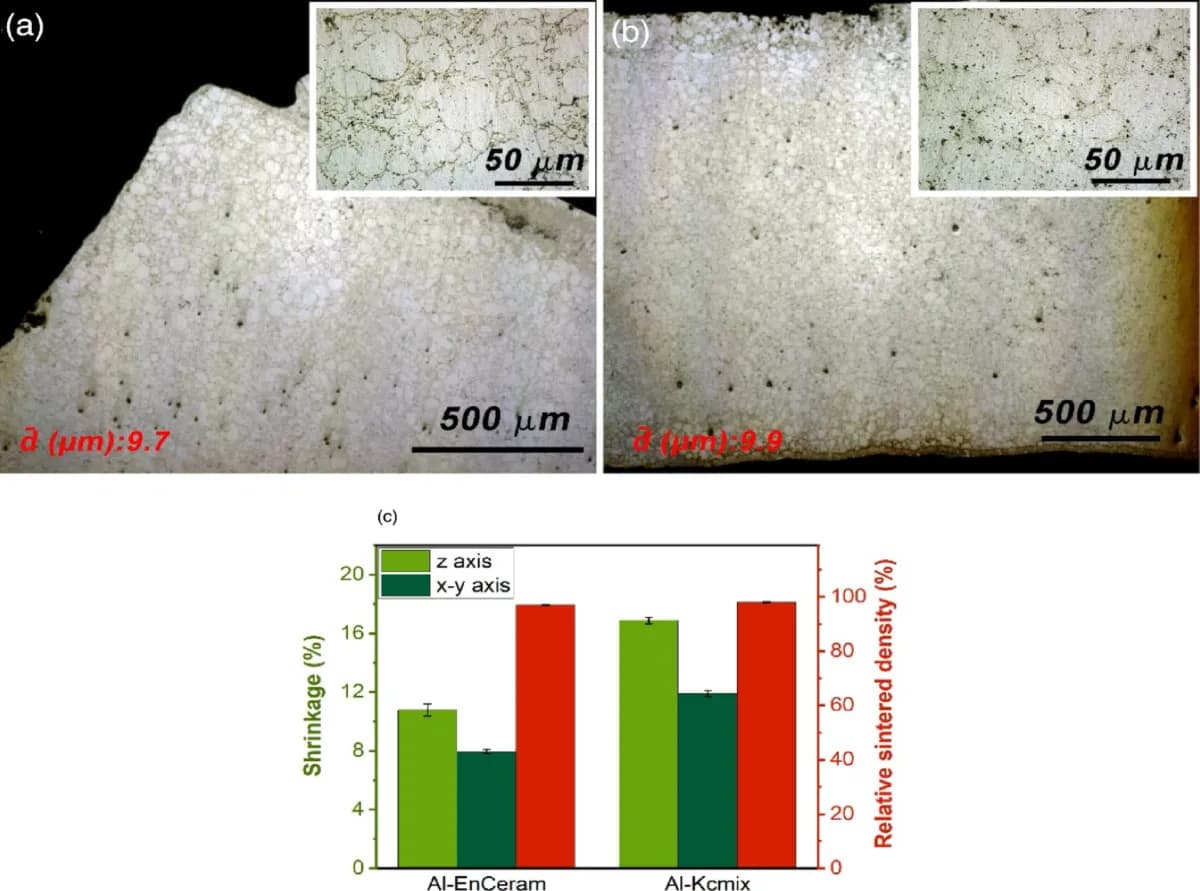
A collaborative research effort led by the Swiss Federal Laboratories for Materials Science and Technology has successfully eliminated the solvent bath stage from the debinding process for extrusion-printed AA6061 aluminium, achieving relative densities of up to 97.9%. This innovative approach combines single-step wick debinding with extended sintering time, significantly enhancing the density of the final product.
Innovative Debinding Process
A recent study conducted by the Swiss Federal Laboratories for Materials Science and Technology demonstrates a breakthrough in 3D printing technology for aluminium. By omitting the traditional solvent bath from the debinding process, researchers were able to produce denser sintered parts from extrusion-printed AA6061 aluminium. This method combines a single-step wick debinding with a longer sintering duration, resulting in impressive relative densities nearing 97.9%.
Research Details
The research team, which includes Elham Montakhab, Sebastian Dariusz Linchard-Syta, Amir Hadian, and Frank Clemens, collaborated with institutions such as AGH University of Krakow and the University of Applied Sciences and Arts Northwestern Switzerland. Their findings were published in the journal Progress in Additive Manufacturing on October 15, 2026, following an earlier preprint release in May.
Process Improvements
In traditional material extrusion methods, parts are initially printed using metal powder mixed with a thermoplastic binder. The binder must be effectively removed before the sintering process. The researchers found that solvent baths often led to oxidation of the aluminium, which negatively impacted the sintering density. By utilizing a porous alumina powder bed to draw out the binder through capillary action during a single heat treatment at 350 °C, they achieved significant binder removal without damaging the part.
Results and Future Considerations
The study reported that after a 24-hour debinding and subsequent sintering in nitrogen at 635 °C for ten hours, the density of the parts improved substantially. Kcmix parts reached densities of 96.7% and EnCeram parts 93.6%, with further extension of the sintering hold time pushing these figures to 97.9% and 96.8%, respectively. However, the researchers caution that while these results are promising, mechanical property evaluations are necessary before this method can be considered for industrial application.
This research points to the importance of refining the debinding process as a key factor in advancing the 3D printing of aluminium, a material that has historically faced challenges in achieving high sintered density.