
Researchers Develop Robotic Legs with 3D-Printed Muscles and Tendons
Written with artificial intelligence.
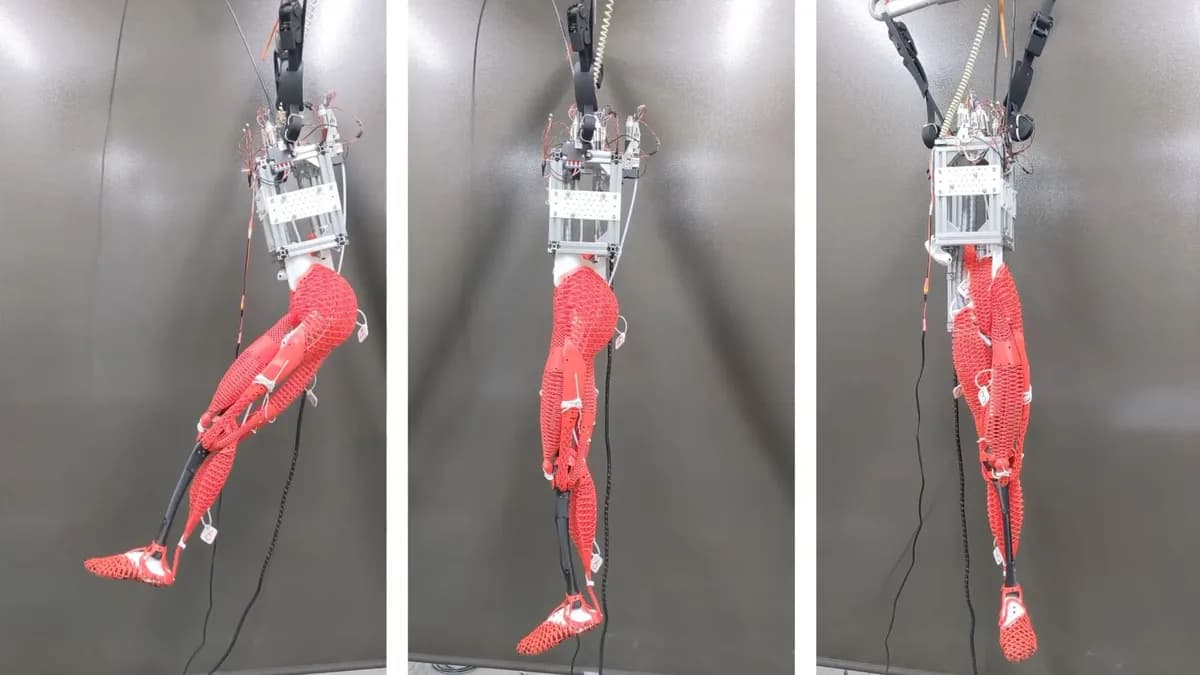
A team from the University of Tokyo has created a life-size robotic leg system using 3D-printed thermoplastic polyurethane (TPU) to simulate the mechanical properties of human muscles, tendons, and ligaments. While the prototype can demonstrate stepping with external support, achieving independent walking remains a challenge.
Innovative Use of 3D Printing
Researchers at the University of Tokyo have developed a novel life-size robotic leg system that utilizes 3D-printed structures made from thermoplastic polyurethane (TPU). This innovative design replicates the properties of human muscles, tendons, and ligaments through the use of different printing patterns on a single material.
Mechanical Properties and Functionality
The robotic legs feature flexible printed structures that provide muscle-like elasticity, tendon stiffness, and ligament support. By varying the printed geometry, the team has created components that can respond differently to mechanical forces. For instance, softer regions behave like elastic muscles, while denser sections mimic tendons. This approach allows the integration of various mechanical properties into a single material, simplifying the design process for musculoskeletal robots.
Challenges in Mobility
Although the prototype can achieve supported stepping, it is not yet capable of independent walking. The current system relies on external support for balance, and the motors, positioned higher on the body, drive the leg movements through an intricate cable system. The researchers face further challenges in manufacturing, with each printed muscle component taking 20 to 40 hours to produce, and issues related to cable friction and mechanical responses under repeated loads complicate control.
Future Directions
The development of this robotic leg system represents a significant step towards creating more sophisticated robotic structures that can mimic human movement. However, achieving reliable independent walking remains a substantial engineering challenge. The researchers are optimistic that their method of using a single flexible material with variable properties could pave the way for future advancements in robotic design and functionality.