
Rapid Fusion Installs £450,000 Zeus Cell at Kingston University
Written with artificial intelligence.
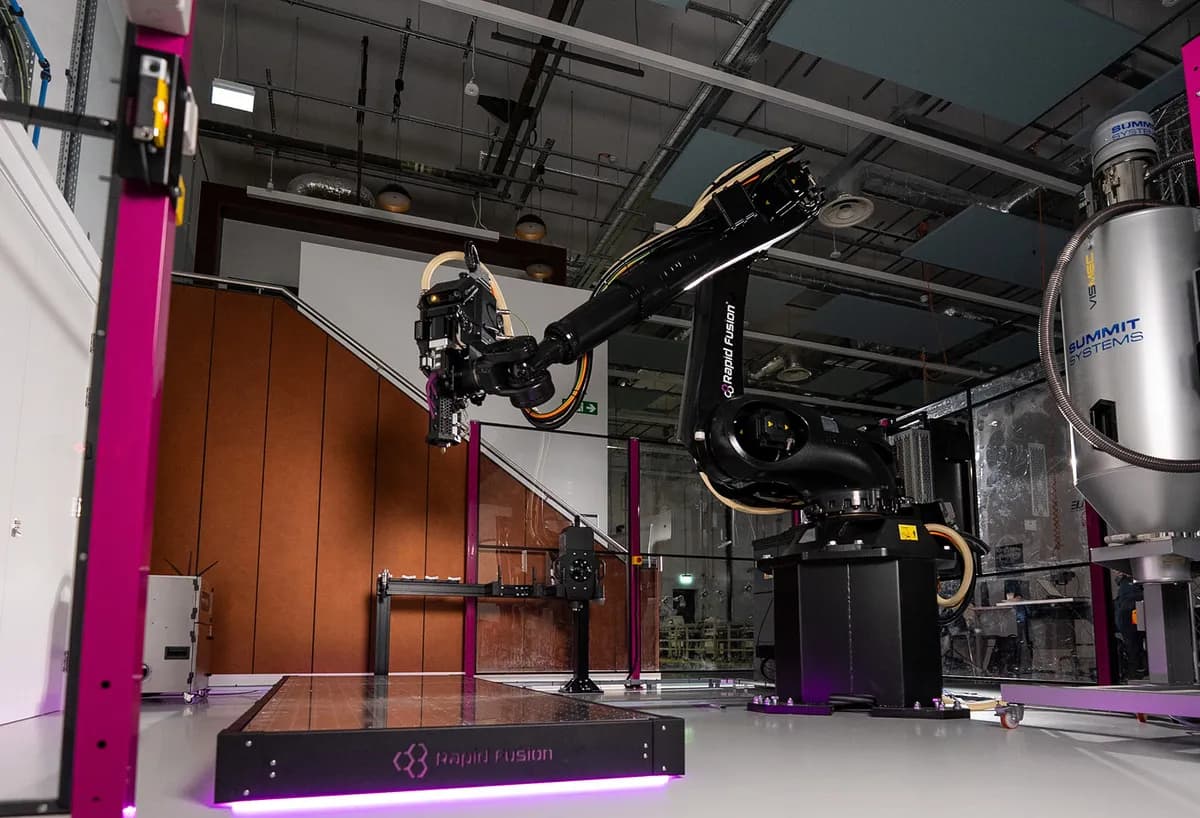
Rapid Fusion has installed a £450,000 Zeus robotic manufacturing cell at Kingston University, enhancing capabilities in large-format additive manufacturing. This system integrates pellet-extrusion 3D printing with CNC milling and scanning for research and educational purposes.
New Installation at Kingston University
UK-based Rapid Fusion has completed the installation of a £450,000 Zeus robotic manufacturing cell at Kingston University's Roehampton Vale campus. This advanced system combines pellet-extrusion 3D printing, industrial scanning, and CNC milling, aimed at enhancing research, teaching, and industrial projects.
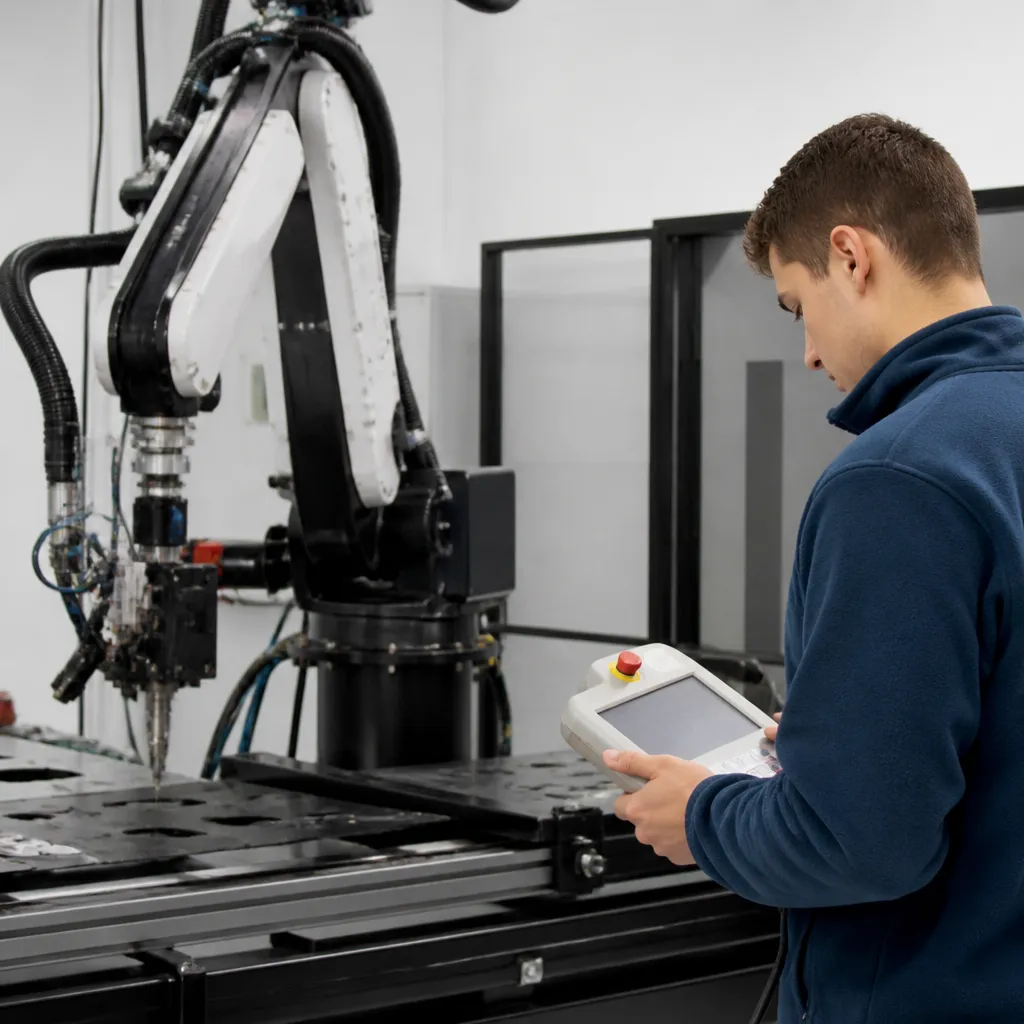
This marks Rapid Fusion's inaugural Zeus installation within a university setting. As part of this collaboration, the company will provide training for staff and explore opportunities for student placements and Knowledge Transfer Partnerships (KTP). Rapid Fusion's CEO, Jake Hand, emphasized that this initiative addresses the skills shortage in robotics and 3D printing in the UK.
Features of the Zeus System
The Zeus cell integrates several manufacturing processes. It first produces a near-net-shape component, which is then scanned using a Zivid industrial camera for precision. Ency, an AI-driven software, generates the machining workflow, allowing for a more streamlined process that reduces the need for transferring materials between different machines.
While the announcement highlights the system's potential for improving efficiency, it does not provide specific metrics on cycle time, machining accuracy, or cost reductions associated with this technology. The company notes that their approach reduces manual involvement in generating toolpaths, but it does not create a fully autonomous workflow.
Broader Implications for Research and Education
Zeus is part of a broader range of robotic LFAM systems developed by Rapid Fusion, which includes other technologies like Apollo and Medusa. Kingston University expects the new equipment to facilitate research initiatives and collaborations with industrial partners. Additionally, Rapid Fusion's existing partnerships with other educational institutions suggest a growing trend in integrating advanced manufacturing technologies into academic settings.
The specifics regarding KTP arrangements or student placements tied to the Zeus installation at Kingston have yet to be disclosed, but the partnership aims to enrich the educational curriculum with hands-on experiences in advanced manufacturing.