
New 3D-Printed Bioreactor Converts Methane Waste into Valuable Chemicals
Written with artificial intelligence.
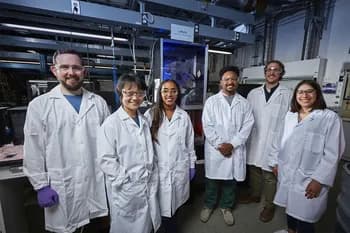
Researchers at Lawrence Livermore National Laboratory have developed a solid-state bioreactor that efficiently converts methane from landfills and wastewater into succinate, a useful chemical. This innovative solution significantly outperforms traditional methods by utilizing a 3D-printed scaffold that accommodates more microorganisms and enhances gas interaction.
Innovative Bioreactor Technology
Lawrence Livermore National Laboratory (LLNL) has introduced a groundbreaking solid-state bioreactor capable of transforming methane, a byproduct from landfills and wastewater treatment, into succinate. This valuable chemical is essential for various applications, including polymer production and food stabilization. The new bioreactor operates more than ten times more efficiently than conventional liquid-based systems while consuming less energy.
Unique Design and Functionality
Traditional bioprocesses involve dissolving gases in liquid, which can be inefficient for poorly soluble gases like methane. LLNL's new approach utilizes 3D-printed scaffolds, which support microorganisms in a hydrogel and enhance interaction with methane. This design eliminates the need for vigorous stirring and allows for faster gas absorption, significantly reducing energy costs.
Research and Collaboration
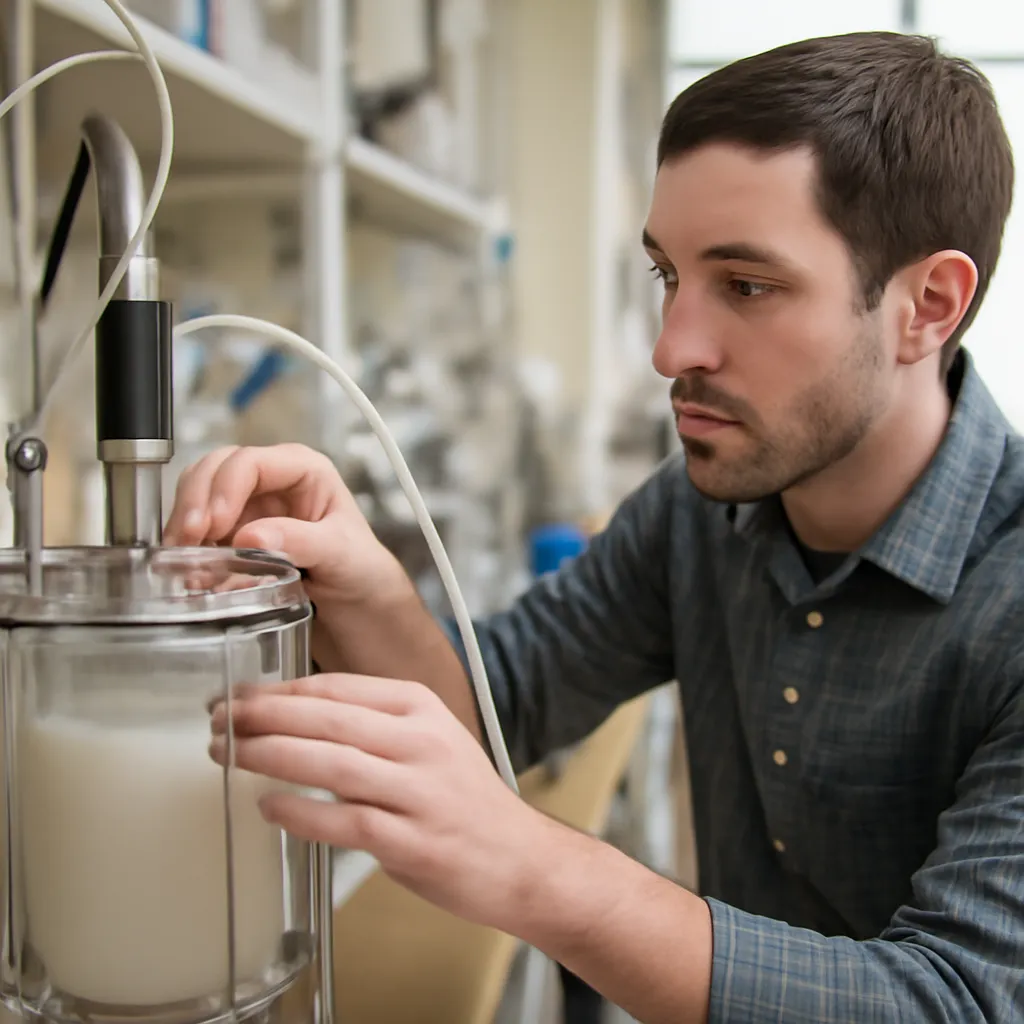
The project integrates expertise from multiple fields, combining biomaterials, additive manufacturing, and bioreactor modeling. Researchers have successfully scaled the bioreactor from a two-milliliter prototype to a one-liter model, allowing for potential applications in smaller treatment facilities. The project also involved collaboration with the National Laboratory of the Rockies, Quasar Energy Group, and the University of North Texas.
Future Applications
Beyond methane conversion, the scaffolding technology could be adapted for other bioprocesses, addressing challenges in oxygen mass transfer and biocatalyst separation. The team at LLNL is actively working to extend the solid-state bioreactor concept for broader industrial applications, which could revolutionize the efficiency of biochemical production.