
Innovative 3D-Printed Hinges Cut Satellite Weight by 93%
Written with artificial intelligence.
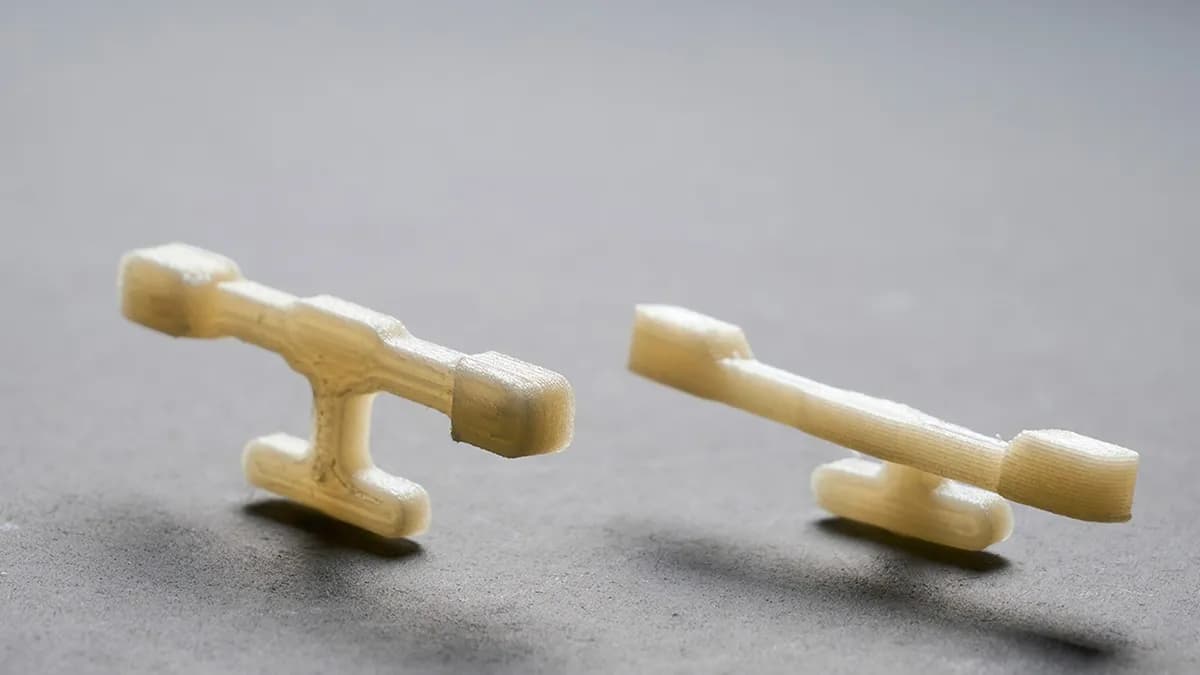
Researchers from Germany's Fraunhofer Institute have created 1.4-gram shape-memory polymer hinges that help deploy satellite solar panels, significantly reducing weight. These hinges, part of the AM-SPACE project, could simplify satellite designs but require further testing in space conditions.
Lightweight Design for Satellites
The Fraunhofer Institute for Applied Polymer Research (IAP) has developed innovative 3D-printed hinges made from shape-memory polymers that weigh just 1.4 grams. This design reduces the weight of satellite components by approximately 93% compared to traditional hinges, potentially transforming satellite deployment mechanisms.
Functionality and Production Time
These hinges operate by using heat to trigger a programmed shape recovery, unfolding satellite solar panels once in orbit. They can deploy within 60 seconds when heated to 140 °C. In addition, the manufacturing process of printing these components takes around 15 minutes, with an additional 30 minutes needed to program their shape. A faster 4D-printing method, which integrates shape-changing responses during fabrication, can produce hold-down and release mechanisms in about five minutes.

Testing and Future Applications
Although the hinges have passed initial laboratory tests, their performance and reliability in actual space conditions remain unverified. The components have undergone various tests, including thermal cycling and vacuum-chamber evaluations, but have yet to be tested in orbit. German Orbital Systems has shown interest in assessing these hinges for space applications, indicating potential for further development and testing in future projects.
Project Overview
The hinges are a part of the Additive Manufacturing of Solar Panels for spACE applications (AM-SPACE) initiative, which runs from October 2023 to September 2026 and is funded through regional innovation programs supported by the European Union. This project aims to enhance satellite technology by simplifying designs and reducing reliance on conventional mechanical systems.