
Advancements in Pavement Construction with 3D-Printed Concrete Geocells
Written with artificial intelligence.
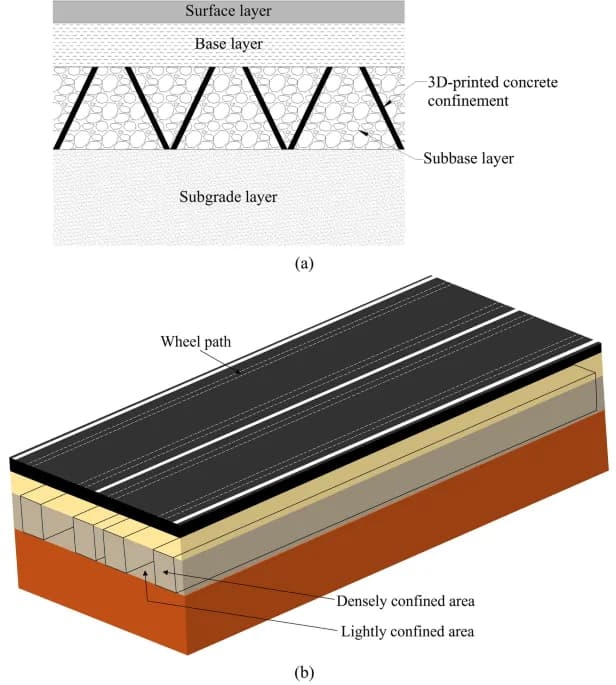
Research highlights the potential of 3D concrete printing (3DcP) in road construction, particularly in enhancing rutting performance. A recent study indicates that 3DcP geocells reduced rutting by 50% compared to unconfined pavement, showcasing its promise as a sustainable alternative to traditional plastic geocells.
Introduction to 3D Concrete Printing in Road Construction
While 3D concrete printing (3DcP) has gained traction in building construction, its application in road construction remains limited. A conceptual approach proposed using aggregate-bed 3DcP to create concrete confinements akin to plastic geocells in unbound granular pavement layers. This new study examines the rutting performance of pavements reinforced with 3DcP geocells through laboratory tests under cyclic loading.
Experimental Findings
The results revealed that 3DcP geocells perform better than conventional plastic geocells in the short term. However, both systems exhibited similar efficiency over the long term due to interlayer debonding within the concrete geocell from repeated stress. Notably, the 3DcP geocell reduced rutting by 50% compared to unconfined specimens, indicating its potential as a viable alternative to plastic geocells. Further enhancements could be achieved by optimizing the shape and mechanical strength of the geocell.
Advantages and Implications
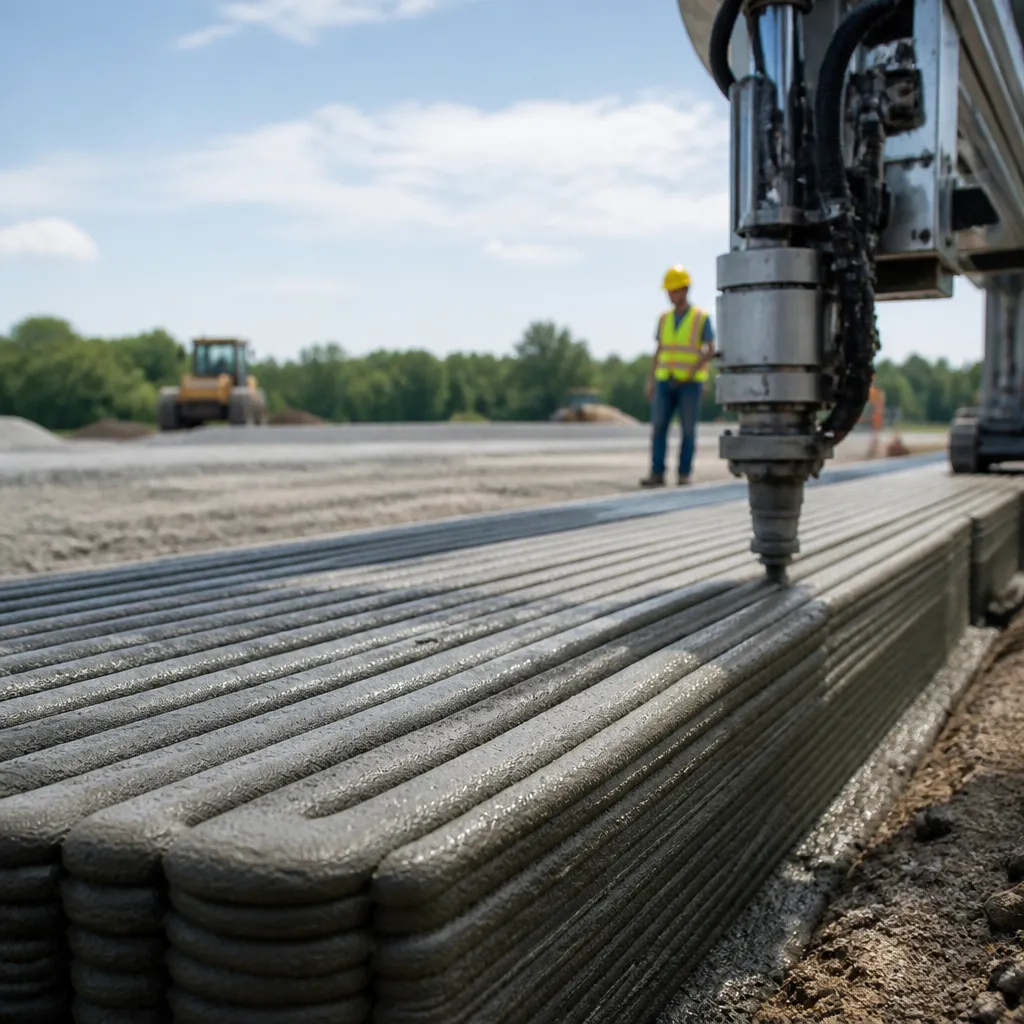
The integration of 3DcP in pavement construction could address several challenges, including the high costs and time consumption associated with traditional methods. This technique allows for the in-situ creation of structures, thereby automating the process and potentially minimizing the environmental impact linked to conventional geosynthetic materials. Not only does this approach promise efficiency gains, but it also reduces reliance on plastics, mitigating health concerns related to microplastic pollution.
Conclusion
This research underscores the promising role of 3D printing technology in modernizing pavement construction. By harnessing the advantages of 3DcP, the construction industry may improve the durability and sustainability of road infrastructure, meeting the increasing demands for efficient transportation solutions.