
3D Printed Reefs Tested for Cold-Water Coral Recovery
Written with artificial intelligence.
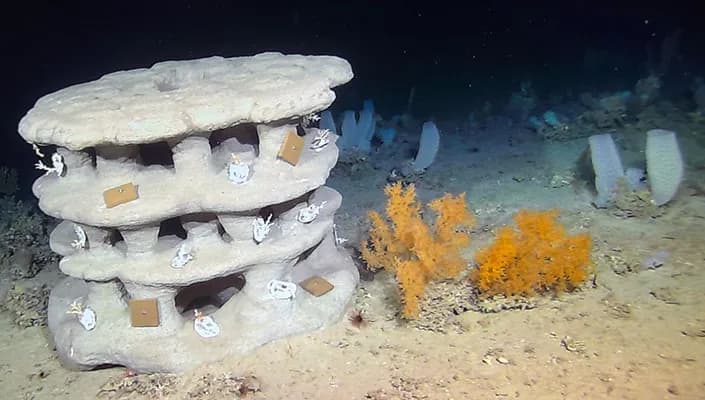
A Franco-Irish research team has deployed 23 3D printed artificial reefs on the Atlantic seabed to aid cold-water coral recovery. The reefs, made from low-carbon concrete, aim to enhance habitats damaged by bottom trawling and are part of a broader restoration initiative involving multiple European partners.
Introduction to 3D Printed Reefs
In a significant effort to restore cold-water coral habitats, a research team from the University of Galway and Ifremer has placed 23 3D printed artificial reefs on the Atlantic seabed. These structures, deployed in August at depths reaching 1,100 meters, are designed to support the recovery of coral ecosystems affected by bottom trawling.
The REDECOR Initiative
This deployment is part of the REDECOR (REstauration DEs CORaux d’eau froide) project, which is a three-year mission involving researchers from the University of Galway, Ifremer, and Sorbonne University. The initiative is also aligned with the REDRESS (Restoration of deep-sea habitats to rebuild European Seas) project, which involves 27 partners across 15 countries.
Design and Functionality of the Reefs
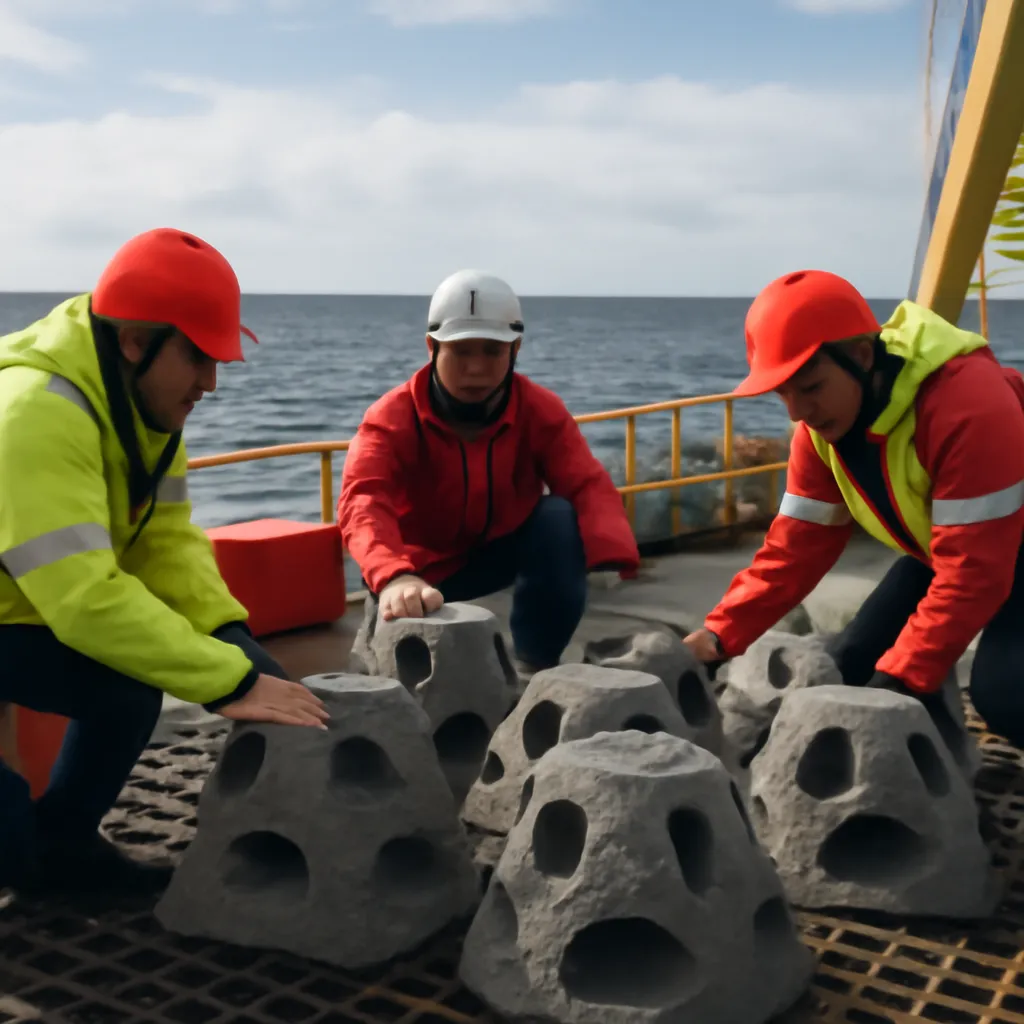
The artificial reefs are eco-designed cylinders crafted from low-carbon concrete that includes volcanic material. Each module measures approximately 80 centimeters in height and 100 centimeters in diameter, weighing about 600 kilograms. They are engineered with complex internal structures to provide microhabitats for marine life. The reefs were strategically placed at two sites: the south-west Porcupine Bank and the Guilvinec Canyon.
Monitoring and Future Research
The research team is evaluating two methods to encourage coral settlement on the reefs. Some modules feature oyster shells and ceramic plates, while others include small coral fragments known as nubbins. Initial findings from previous deployments indicate that coral nubbins have survived and attracted various marine species, suggesting positive early signs for the project's goals. Over the next few years, continuous monitoring will track coral growth and the overall health of the ecosystems around the reefs, with further evaluations planned for next year.
Conclusion
The REDECOR project highlights the urgent need for active restoration of cold-water corals, as traditional protection efforts alone are insufficient for these fragile ecosystems. By utilizing 3D printing technology, the initiative aims to facilitate faster recovery of damaged coral habitats, potentially influencing future conservation strategies across the Atlantic and beyond.