
WASP Innovates with Dual Extrusion Technology for 3D Printing
Written with artificial intelligence.
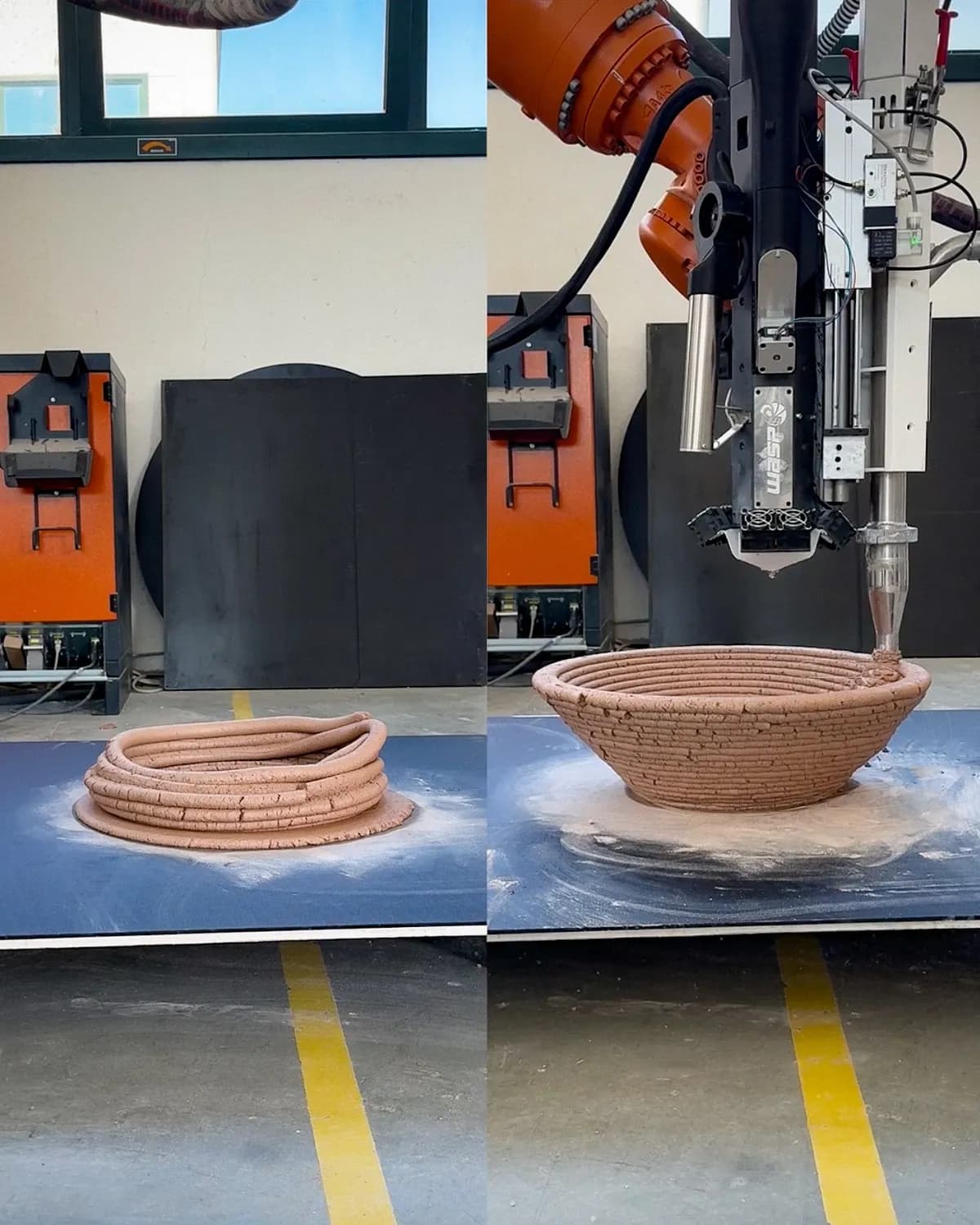
WASP, an Italian 3D printer manufacturer, is developing a dual extrusion technology that integrates earth-based materials with plastic reinforcement. This patent-pending method is designed to enhance the structural capabilities of 3D printed objects while allowing for material recovery at the end of their life cycle.
Overview of WASP's Dual Extrusion Technology
Italian 3D printer manufacturer WASP is advancing the field of additive manufacturing with a new dual extrusion technology. This innovative approach combines earth-based materials with plastic reinforcement in a single printing process, employing both Liquid Deposition Modeling (LDM) and Fused Granulate Fabrication (FGF). This integration allows the system to alternate between depositing an earth-based paste and thermoplastic material, offering unique advantages in structural integrity.
Benefits of the New Method
WASP's technique aims to facilitate the creation of complex geometries that would typically collapse using only earth materials. By introducing plastic reinforcement during certain stages of the printing process, the company enhances the structural support of the printed objects. Moreover, this dual system is designed to allow for the separation of materials at the end of the object's life, promoting recycling and material recovery.
Compatibility and Testing
The initial experiments with this technology include the use of recycled PLA, although WASP has not detailed the full spectrum of compatible polymers. The tests are ongoing, focusing on refining the process and understanding its limitations. Currently, no commercial launch date has been announced, nor has the company revealed specific performance data from these tests.
Application and Future Prospects
WASP's exploration of combining natural and synthetic materials aligns with its commitment to sustainable architecture. Past projects, such as the collaboration with Columbia University on 3D printed earth tiles, highlight the company's dedication to innovative building solutions. The latest dual extrusion technology represents a significant step toward enhancing the capabilities of earth-based 3D printing while addressing environmental concerns regarding material usage and recovery.