
Study Finds 3D-Printed Prosthetic Hands Lag Behind Commercial Alternatives
Written with artificial intelligence.

A recent study reveals significant performance gaps between commercially available prosthetic hands and 3D-printed models in grasping capabilities. The research highlights the challenges of 3D-printed devices while acknowledging their affordability and customization potential.
Key Findings of the Study
Researchers conducted a standardized evaluation comparing mechanically grasping capabilities of commercially available prosthetic hands with 3D-printed models. Published in BMC Biomedical Engineering, the study utilized the Anthropomorphic Hand Assessment Protocol, revealing that commercial devices significantly outperformed 3D-printed alternatives in manipulating household objects.
Evaluation Methodology
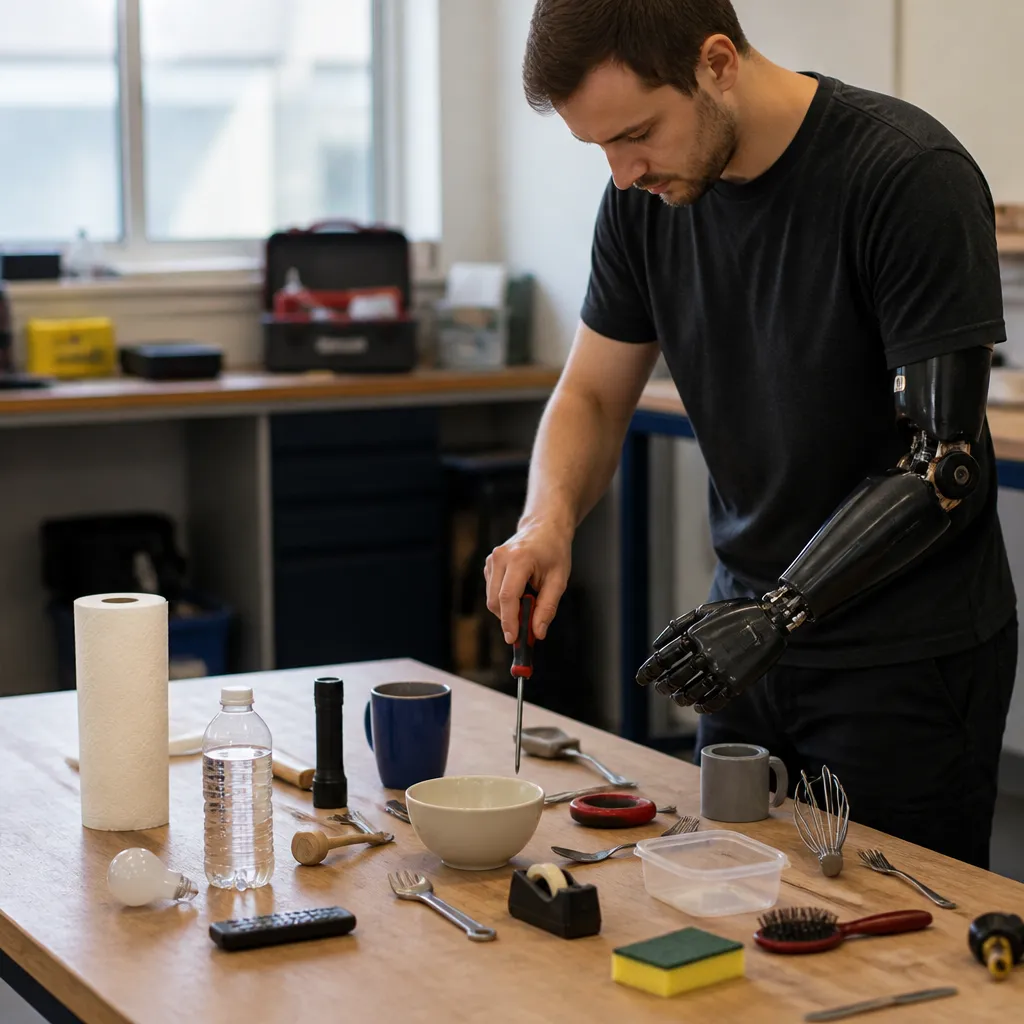
The assessment involved 26 tasks with 25 common household items, utilizing ten different grip patterns. Independent of user variables, this method focused solely on the mechanical performance of the devices. Three open-source 3D-printed hands—HACKberry Hand, HANDi Hand, and BEAR PAW—were tested against three popular commercial options: Össur i-Limb Quantum, RSL Steeper BeBionic Hand V3, and Psyonic Ability Hand.
Performance Disparity
Statistical analysis indicated a significant difference in grasping abilities, with a P-value of 0.0083 favoring commercial hands. The study also noted that while 3D-printed devices could grasp objects, they struggled to maintain that grip after reorientation. This limitation was attributed to the lower technology readiness and build quality of 3D-printed models.
Advantages and Challenges of 3D-Printed Prosthetics
Despite their shortcomings, 3D-printed prosthetics offer affordability, with production costs starting at $19 compared to the $20,000 average for commercial devices. This cost-effectiveness promotes inclusivity in research and allows rapid prototyping tailored to individual needs. However, the study acknowledges limitations in sample size and the scope of tested models, emphasizing the need for further research to improve functionality and bridge the gap between cost and performance.