
Northwestern University Develops DIAL 3D Printing Method for Enhanced Materials
Written with artificial intelligence.
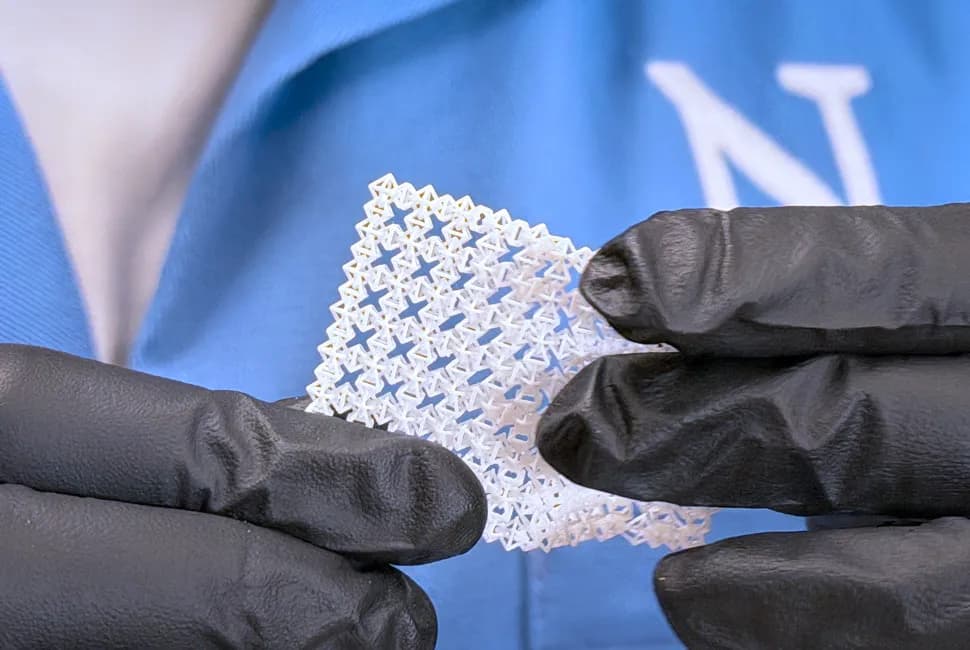
Engineers at Northwestern University have introduced a new 3D printing technique called direct ink additive lithography (DIAL). This method significantly reduces printing time and improves the quality of parts, producing a porous grid in just 30 minutes compared to 124 minutes with traditional extrusion methods.
Overview of DIAL
Northwestern University's engineers have unveiled a novel 3D printing method known as direct ink additive lithography (DIAL). This innovative approach enables the production of a porous grid in 30 minutes, a dramatic improvement over the 124 minutes required by conventional extrusion. DIAL not only accelerates the printing process but also enhances the quality of the printed parts, yielding sharper details and fewer defects.
How DIAL Works
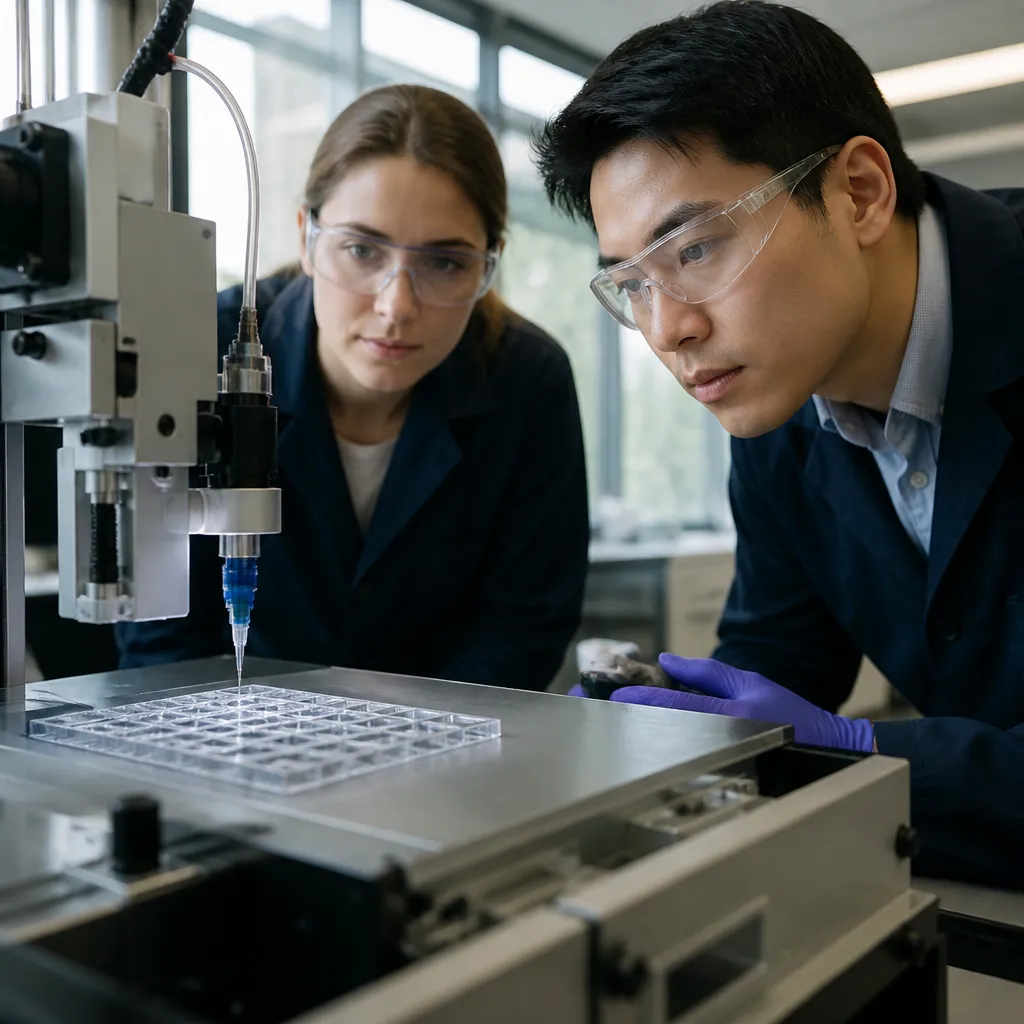
The DIAL technique combines two additive manufacturing processes, overcoming the limitations of each. It employs a slot-die nozzle to deposit thick ink onto a surface, which is then spread into a uniform film. A projector subsequently cures the ink where the light hits, allowing for rapid layer building. This method circumvents common issues associated with extrusion, such as clogging, and supports the use of dense, particle-filled inks that traditional resin printers struggle with.
Advantages of DIAL
DIAL’s unique ink formulation, which combines light-curable resin with fumed silica nanoparticles, provides structural support during printing, eliminating the need for additional support structures. This is particularly beneficial as removing supports can risk damaging delicate features of the printed parts. The team has successfully printed intricate designs, including lattices with walls as thin as 150 microns and interlocking chainmail.
Future Applications
The Robotic Matter Lab is exploring DIAL for various applications, such as spacecraft components, soft robotics, medical devices, and biomanufacturing. The method's potential extends to creating materials previously unattainable through 3D printing, indicating significant advancements in the field of functional materials.
Funding and Research Collaboration
The development of DIAL was supported by the National Science Foundation, the Air Force Office of Scientific Research, and the Ryan Family Fellowship at Northwestern. The research reflects a collaborative effort to push the boundaries of 3D printing technologies, promising to deliver innovative solutions across multiple industries.