
New 3D-Printed Filter Removes Up to 90% of Microplastics from Water
Written with artificial intelligence.
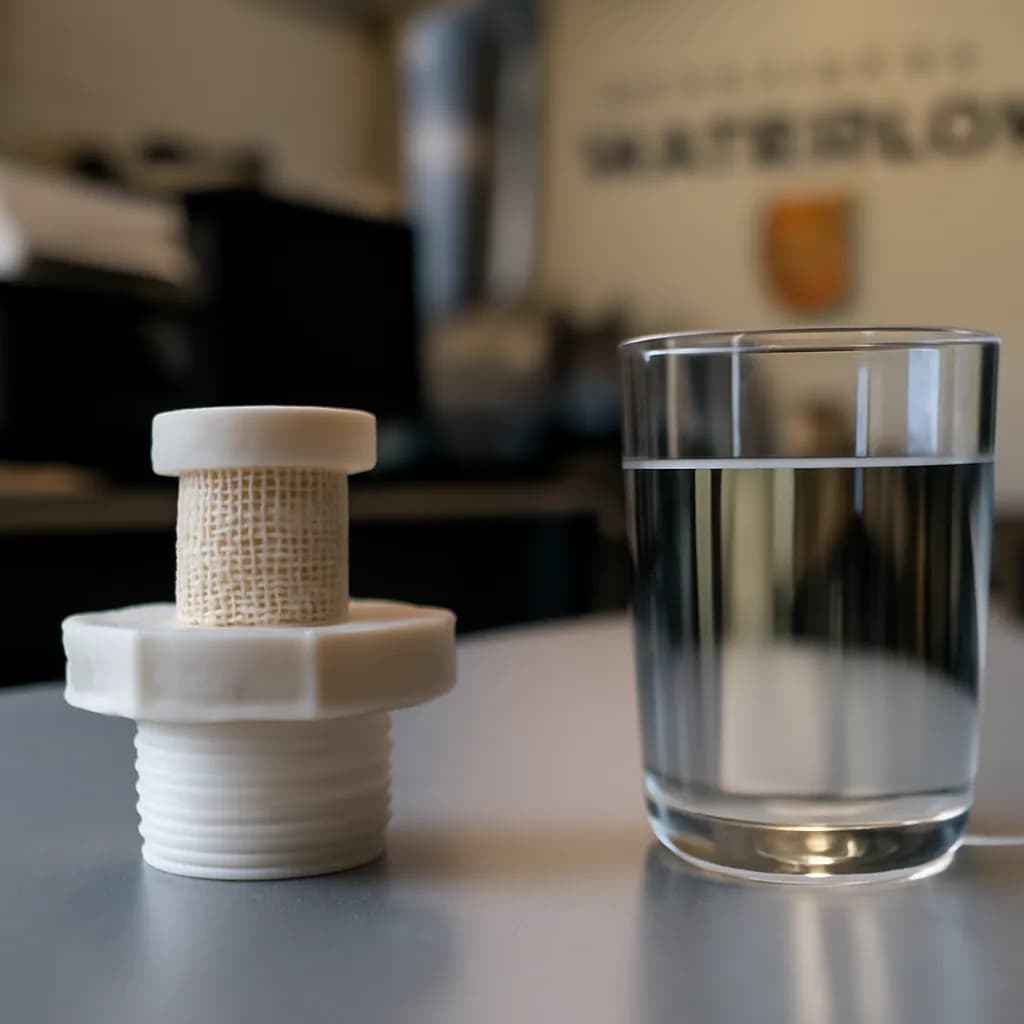
Engineers at the University of Waterloo have created a customizable, low-cost 3D-printed filter capable of removing up to 90% of microplastics from water. This innovative filter could be applied in both household and industrial water treatment systems.
Innovative Filtration Technology
Researchers at the University of Waterloo have developed a low-cost, customizable 3D-printed filter that can eliminate up to 90% of microplastics from water. This solution is aimed at improving both residential and industrial water treatment processes.
Microplastics, defined as plastic particles smaller than five millimeters, are increasingly contaminating drinking water sources globally. Their ingestion may lead to serious health issues, including cancer and heart disease. The engineering team designed a filtration column composed of stacked disk filters made from biodegradable polymer, which can be tailored for various applications.
Development Process
The research utilized a three-step approach to enhance the filter's effectiveness:
- Design: Disk filters were engineered to maximize water contact.
- Material Use: A water-soluble polymer was incorporated, which is washed away post-printing, creating nano and micro-scale pores.
- Adhesive Application: A pressure-sensitive adhesive was added to enhance microplastic capture without obstructing the pores.

Dr. Tizazu Mekonnen, a chemical engineering professor at the university, noted that while larger microplastics are captured effectively, challenges remain with particles smaller than 10 micrometers. Ongoing research aims to tackle this remaining challenge.
Practical Implications
The newly developed filter shows significant promise for integration into household water systems and industrial treatment plants, as current methods like activated carbon are only partially effective against microplastics. The findings were published in the journal Separation and Purification Technology, highlighting the filter's potential to address a growing environmental concern.