
Franco-Irish Team Deploys 3D Printed Reefs for Coral Recovery
Written with artificial intelligence.
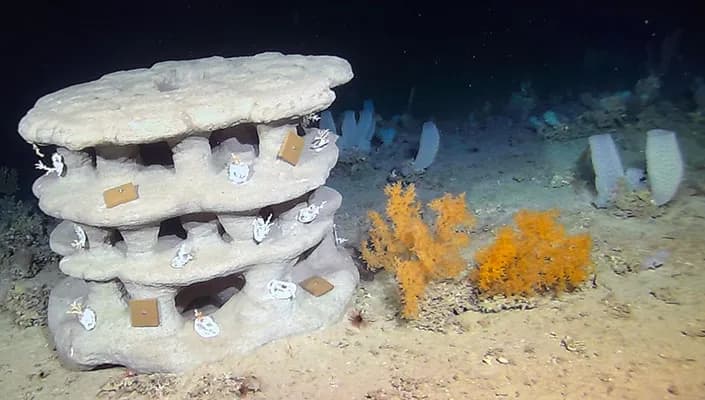
A research collaboration between University of Galway and Ifremer has deployed 23 3D printed artificial reefs in the Atlantic Ocean to facilitate the recovery of cold-water coral habitats damaged by bottom trawling. The project aims to evaluate the effectiveness of these structures in promoting coral growth and biodiversity.
Overview of the Project
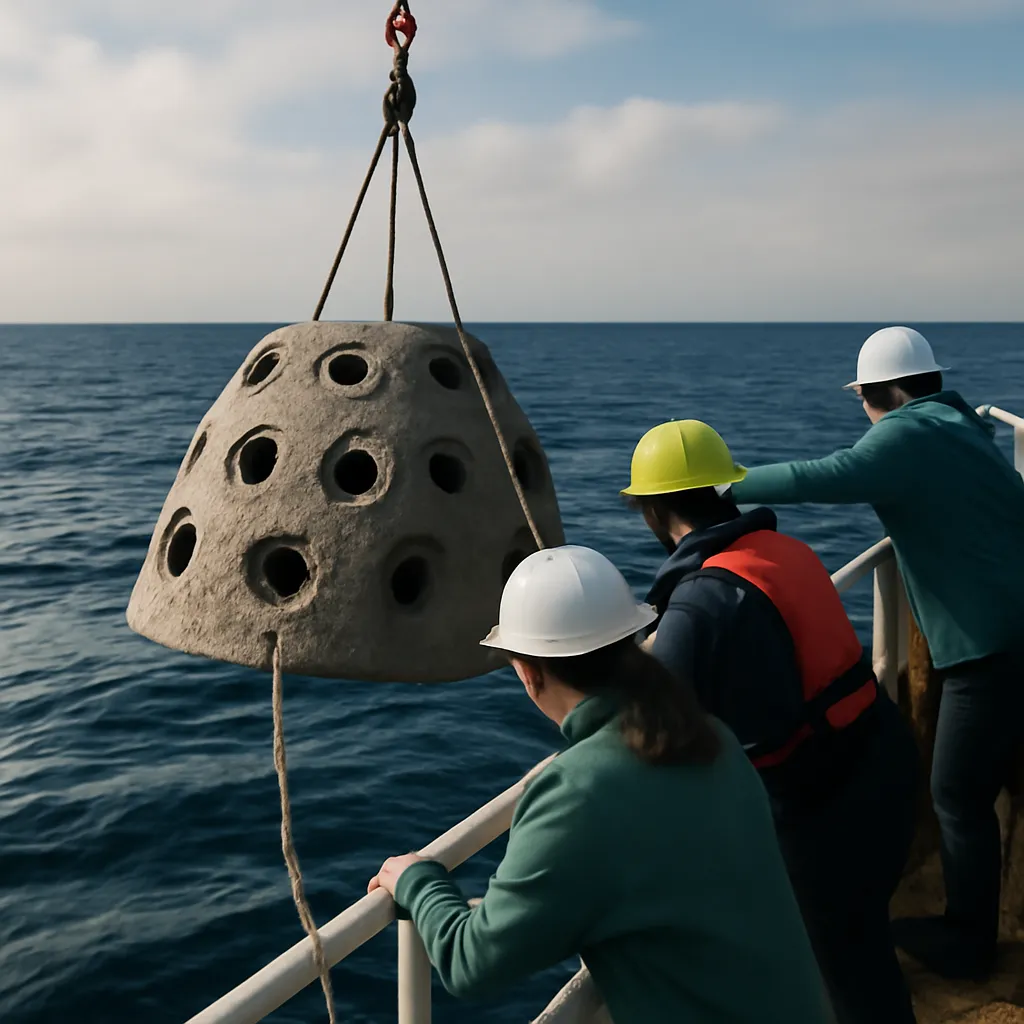
The deployment of 23 artificial reefs constructed using 3D printing technology has taken place at depths up to 1,100 meters in the Atlantic Ocean. This initiative, led by a Franco-Irish research team from the University of Galway and Ifremer, aims to determine if 3D printed structures can assist in the recovery of cold-water coral habitats affected by bottom trawling. The reefs were installed in August at two protected locations: the Porcupine Bank near Ireland and the Guilvinec Canyon in France.
Design and Functionality
These eco-designed reefs are made from low-carbon concrete mixed with volcanic material. Each module measures approximately 80 centimeters in height and 100 centimeters in diameter, weighing around 600 kilograms. The 3D printing process allowed for the inclusion of complex internal structures, such as tunnels and ledges, which provide microhabitats for marine life. The modules were strategically placed individually over an area of half a hectare to encourage coral colonization.
Coral Seeding Methods
The research team is experimenting with two approaches to encourage coral growth on these reefs. Some modules have been equipped with oyster shells and ceramic tiles to attract free-swimming coral larvae, while others are seeded with living coral fragments, or 'nubbins,' that were collected and nurtured in controlled conditions before being attached to the reefs.
Monitoring and Future Steps
The project's outcomes will be monitored through photography, video, and 3D mapping over the coming years. Initial results from previous deployments indicate that some coral nubbins have survived and attracted marine life, signaling potential success for these artificial reefs. The team intends to assess environmental conditions to determine what is necessary for healthy coral growth and how external factors like climate change may impact restoration efforts.
The REDECOR project emphasizes the urgent need for active restoration of cold-water corals, which, unlike their tropical counterparts, grow very slowly and are significantly threatened by fishing practices. This project not only aims to restore damaged habitats but also hopes to contribute to the broader European Nature Restoration Law initiatives.