
AlTiSiN Coating Improves Creep Resistance in 3D-Printed Titanium Alloy
Written with artificial intelligence.
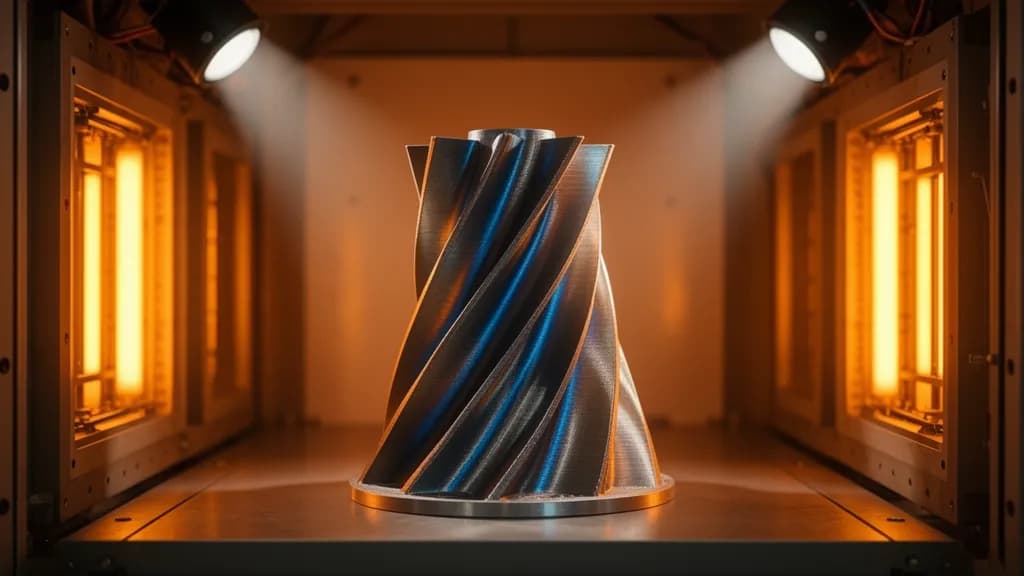
Research indicates that applying an AlTiSiN coating to Ti6Al4V alloy significantly reduces minimum creep rates by up to 54% under high-temperature conditions. This enhancement is crucial for the material's use in aerospace and defense applications.
Introduction
Recent studies have demonstrated that an AlTiSiN coating can effectively enhance the high-temperature mechanical performance of additively manufactured titanium alloy components. Specifically, the research focused on the Ti6Al4V alloy produced through laser powder bed fusion (LPBF), assessing how this ceramic layer impacts creep behavior under thermal and mechanical stresses.
Research Findings
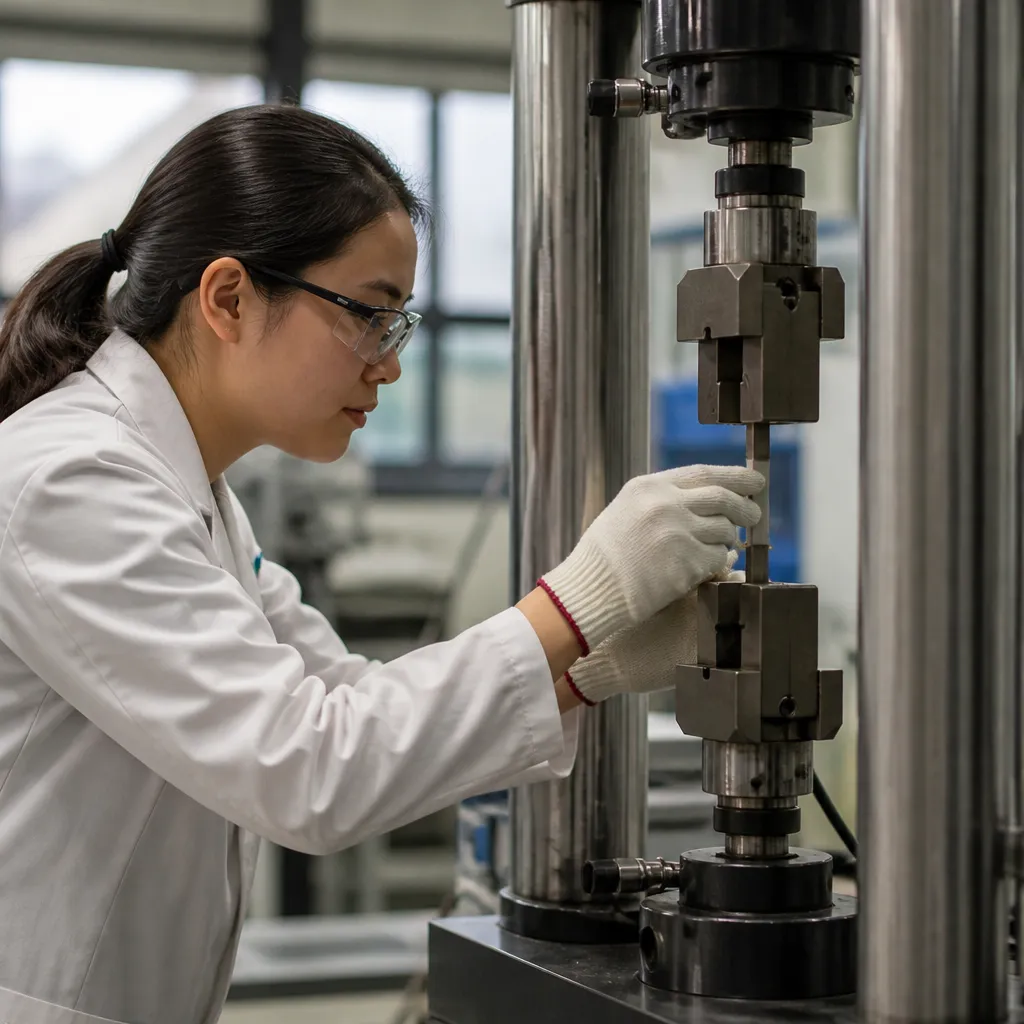
The study involved constant-load creep tests conducted at temperatures between 550 °C and 650 °C, with tensile stresses ranging from 75 MPa to 300 MPa. The results showed that the AlTiSiN-coated specimens had significantly lower minimum creep rates across various testing conditions, with reductions observed between 18% and 54% relative to uncoated samples. These promising results suggest that the coating can enhance the alloy's performance under specific thermal and stress conditions.
Mechanisms and Analysis
Kinetic analyses revealed stress exponents of approximately 4.36 to 4.71, indicating that dislocation-controlled power-law creep was at play. The research identified diffusion-assisted dislocation climb as a key mechanism influencing the deformation response of the alloy. Additionally, fractographic analysis indicated ductile fracture behavior, characterized by microvoid nucleation and coalescence in both coated and uncoated materials.
Implications
While the findings highlight the potential of the AlTiSiN coating to improve high-temperature creep performance in LPBF-fabricated Ti6Al4V, the effectiveness of this treatment is contingent upon specific thermal and stress conditions. This underscores the need for further exploration to optimize its application in aerospace and defense sectors, where material performance is critical.
Reference
Ceper, B., & Tünçay, M. M. (2026). High-temperature creep behavior of AlTiSiN-coated additively manufactured Ti6Al4V alloy. Journal of Materials Science. https://doi.org/10.1007/s10853-026-14042-7