
Affordable Bioprinting: Modified Ender 3 for Engineered Living Materials
Written with artificial intelligence.
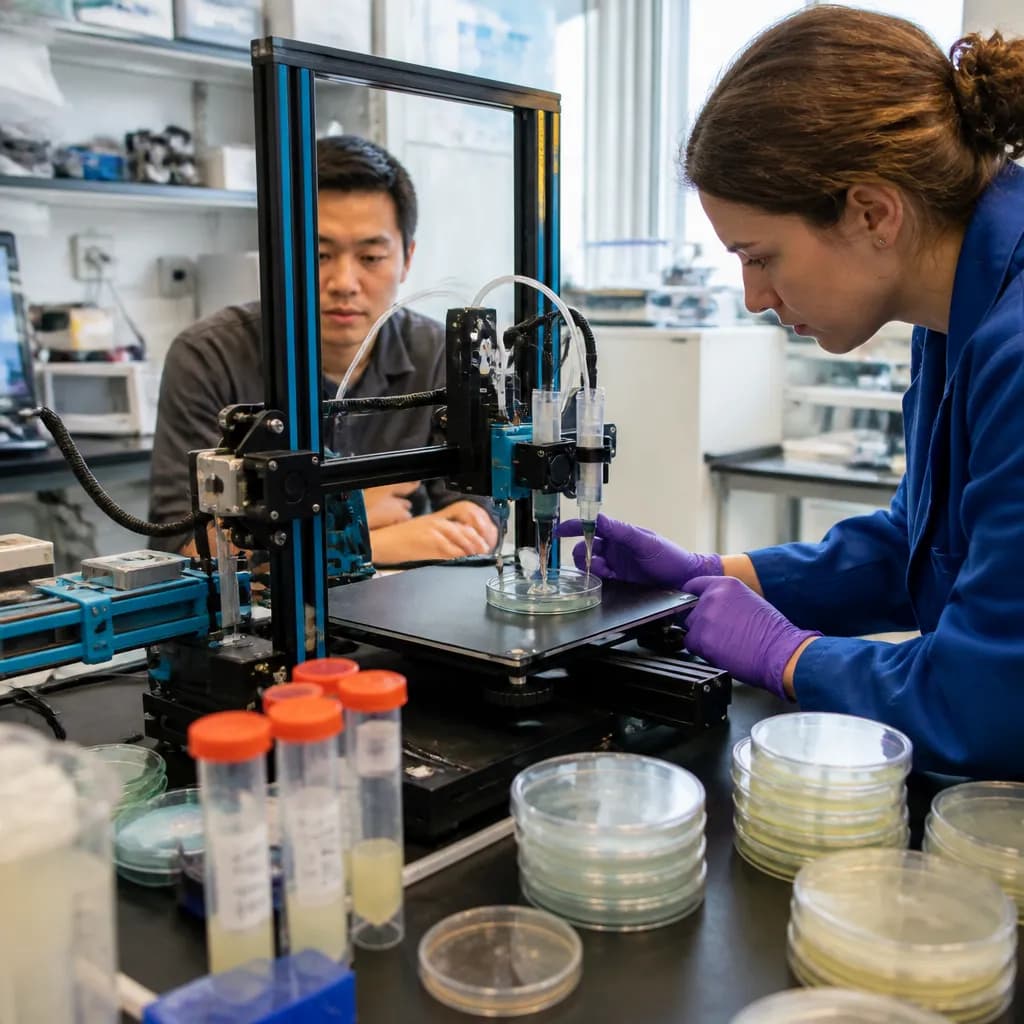
Researchers at the University of Rochester have transformed an Ender 3 3D printer into a bioprinter for just $450, significantly lowering the cost compared to traditional bioprinters. This innovation allows for the printing of living materials using a custom bio-ink made from bacteria and alginate.
Cost-Effective Bioprinting
A team of microbiologists at the University of Rochester has successfully modified an Ender 3 FDM 3D printer to create a bioprinter for engineered living materials, achieving this for a mere $450. In contrast, conventional bioprinters typically exceed $100,000 in price.
Custom Modifications
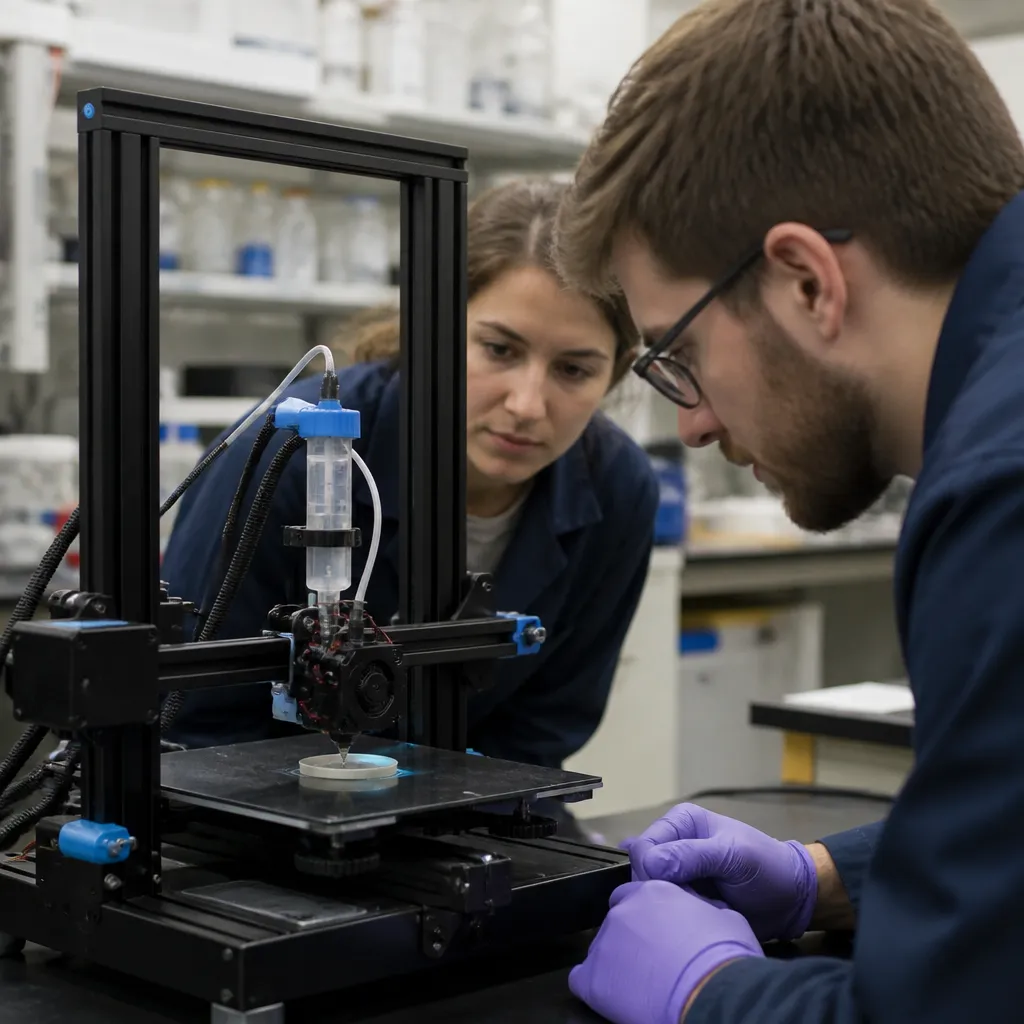
The researchers redesigned the printer using SolidWorks and adjusted its settings in Slic3r to accommodate a custom syringe-pump print head. The majority of the original printer structure remains intact, with significant modifications focusing on the print head, which now utilizes a 10 mL glass Luer-lock syringe to manage the extrusion and retraction of bio-inks.
Innovative Bio-Inks
The bioprinter employs a bio-ink composed of bacteria mixed with alginate, which is printed into support gels made of agarose or gelatin. Agarose allows for long-term incubation, keeping the engineered materials viable for four weeks or more, while gelatin facilitates the creation of extractable prints. The interaction of calcium ions in the support materials causes the alginate strands to cross-link, forming a solid structure that encapsulates the living bacteria.
Impact on Research
In a paper published in August by biologist Anne S. Meyer and her team in ACS Applied Polymer Materials, the researchers highlight how lower hardware costs can accelerate advancements in synthetic biology and 3D bioprinting. The study suggests potential applications for these engineered living materials, including antimicrobial treatments and biodegradable alternatives to plastics, which could pave the way for future innovations in sustainable materials development.