
Adding Iron Improves Strength of 3D-Printed Titanium Alloy for Aerospace
Written with artificial intelligence.
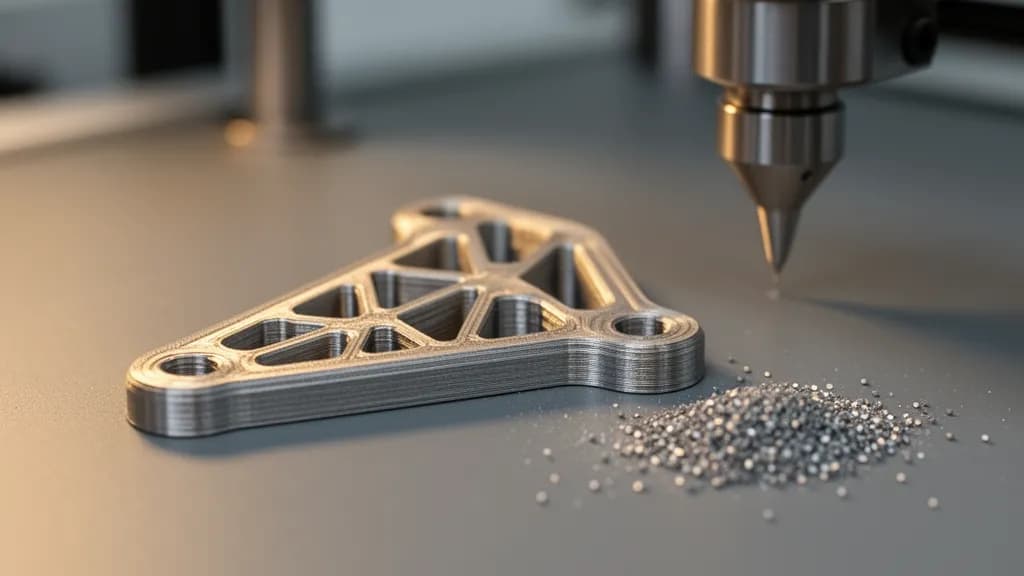
A recent study showed that adding 1.5 weight percent iron to the Ti5553 titanium alloy significantly enhances its strength while preserving ductility. The research suggests this modification could lead to more cost-effective and efficient manufacturing in the aerospace sector.
Enhancements in Titanium Alloy
Researchers from the University of Science and Technology Beijing have discovered that incorporating 1.5 weight percent iron into the titanium alloy Ti-5Al-5Mo-5V-3Cr, known as Ti5553, leads to notable improvements in its mechanical properties. This addition reduces the columnar grain width in the alloy from 102.69 micrometers to 54.56 micrometers and raises its ultimate tensile strength to 1016 megapascals, compared to 864 megapascals for the unmodified version.
Microstructural Changes
The study highlights the impact of iron on the alloy's microstructure, which is vital for aerospace applications. The finer grain structure resulting from the iron addition helps prevent dislocation motion, thus improving strength. The researchers noted that the iron-modified alloy retains nearly the same ductility, with an elongation of 18.9 percent before failure, only slightly more than the base alloy's 18.5 percent.

Aging Effects and Caution
While the iron addition enhances strength, it also poses risks. During heat treatment, the ductility of the alloy decreased from 7.7 percent to 4.4 percent due to embrittlement caused by grain-boundary alpha formation. This indicates that while iron improves certain properties, excess iron can lead to premature failure in some instances.
Optimal Iron Content
The findings suggest 1.5 weight percent iron is the optimal amount for achieving a balance of strength and ductility. Higher concentrations, such as 2.25 weight percent, significantly increased defect rates in printed parts, highlighting the importance of controlling iron levels during the manufacturing process. This research underlines the potential for more economical and effective designs in 3D-printed titanium components for aerospace use.