
3D-Printed Cement Supercapacitors Enable Energy Storage in Buildings
Written with artificial intelligence.
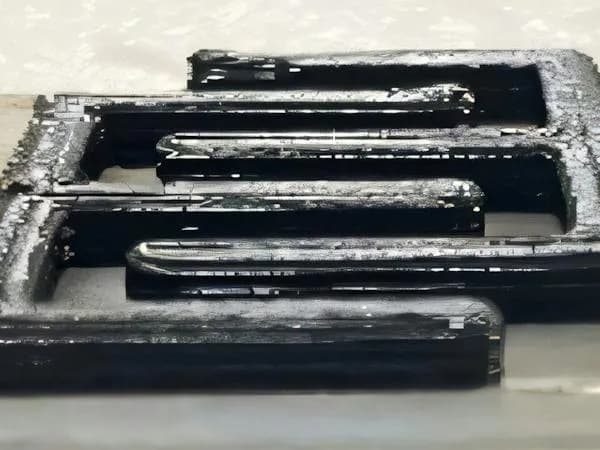
Researchers have developed a 3D-printed cement-based supercapacitor that allows concrete structures to store electricity, effectively doubling their functionality. This innovation could lead to buildings that integrate energy storage capabilities with traditional structural roles.
Introduction to Cement-Based Supercapacitors
Concrete is a fundamental material in construction, typically used for floors, walls, and foundations. Researchers are now exploring its potential to serve a dual purpose by developing a 3D-printed cement supercapacitor that can store energy while also providing structural support.
Key Innovations in Design
The team faced significant challenges in creating an effective cement-based supercapacitor. Traditional designs often suffer from poor mechanical properties when thin layers are used, while thicker designs can hinder ion movement. To overcome these issues, the researchers created a printable electrode ink made from cement, carbon nanotubes, and carbon black. By utilizing direct ink writing in an interdigitated pattern, they crafted electrodes that resemble fingers fitting between each other, improving ion mobility.
Performance Metrics
The resulting cement supercapacitor achieved impressive specifications:
- Areal Capacitance: 162.14 mF/cm²
- Energy Density: 22.52 μWh/cm² across a 1.0 V window
- Power Density: 0.49 mW/cm²
- Compressive Strength: 23 MPa, comparable to standard concrete
To demonstrate its functionality, three supercapacitors were printed onto a single slab, and they successfully powered a small array of LEDs.
Challenges and Future Potential
Despite its successes, the technology faces challenges, particularly in extreme temperatures where performance can drop due to electrolyte freezing. However, the implications of this development are significant. Future buildings could harness locally generated renewable energy, using concrete as an integral part of their electrical systems. Smaller versions of these supercapacitors might also support embedded devices, enhancing the functionality of structural concrete.