
3D-Printed Cement Supercapacitors Enable Energy Storage in Building Structures
Written with artificial intelligence.

Researchers have developed a 3D-printed cement supercapacitor that functions as both a structural element and an energy storage device. This innovation allows concrete to store electricity from renewable sources, enhancing energy efficiency in buildings while maintaining strength comparable to traditional concrete.
Innovative Energy Storage in Concrete
A recent study published in ACS Nano has introduced the concept of cement supercapacitors, which could revolutionize how buildings utilize energy. Led by Jing Zhong and his team, this research indicates that concrete can do more than just support structures; it can actively store and release electricity generated by rooftop solar panels. This could allow buildings to effectively manage energy use, particularly during outages.
How Supercapacitors Work
Supercapacitors differ from traditional lithium-ion batteries in that they store energy electrostatically rather than through chemical reactions. This method allows for rapid energy release, making them ideal for applications requiring short bursts of power. The new cement supercapacitors can absorb energy from solar panels and discharge it as needed, optimizing renewable energy usage within buildings.
Overcoming Concrete's Conductivity Challenge
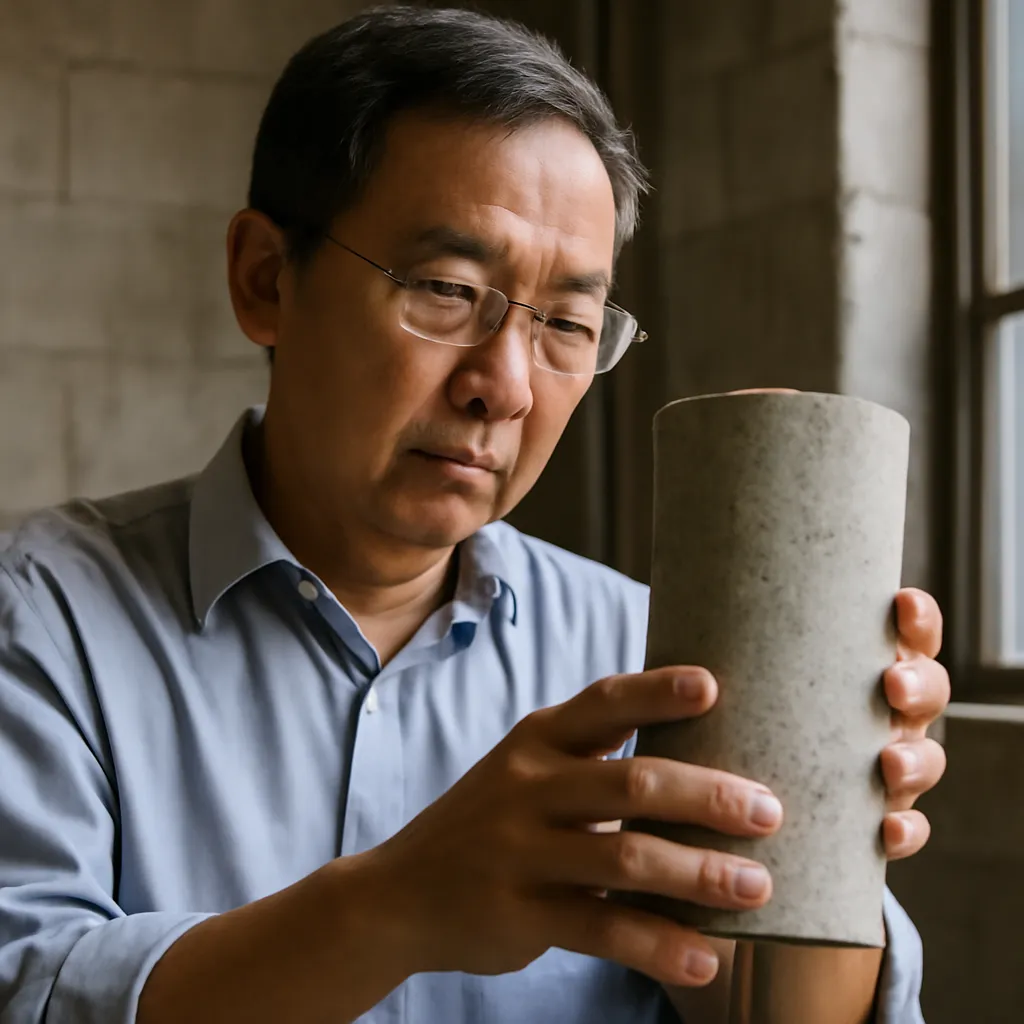
One of the main challenges in creating cement supercapacitors is concrete's poor electrical conductivity. The research team addressed this by incorporating carbon nanotubes and carbon black into the cement mix, transforming it into a conductive material without compromising its structural integrity. This innovative approach allows the cement to serve as both an energy storage device and a robust building material.
Practical Applications and Limitations
The team demonstrated that multiple supercapacitors could work together to power small devices, such as LEDs, proving their practical application. However, the technology currently faces limitations, particularly in cold temperatures where performance may decline. Future research will aim to enhance the supercapacitor's resilience in such conditions, ensuring that this energy storage solution can be reliably used in various climates.