
3D Printed Biochar-Mycelium Composites Show Promise for Building Components
Written with artificial intelligence.
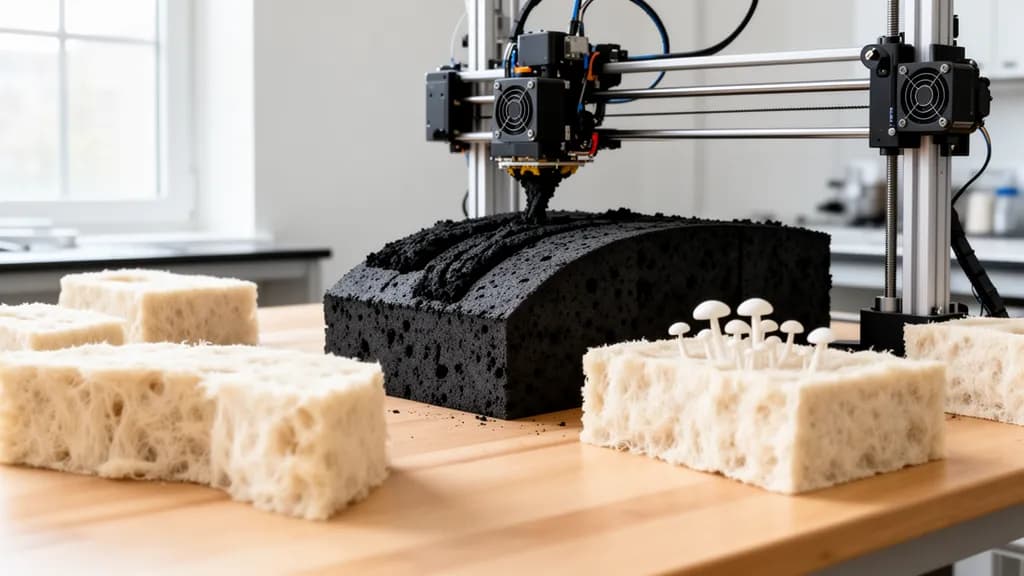
An experimental study reveals that 3D printed biochar-mycelium composites can achieve reduced vertical shrinkage of 3 to 5 percent and demonstrate potential for bio-welding into cohesive building components. The research highlights challenges related to mechanical performance and dimensional stability.
Overview of the Study
Researchers from Architectural Intelligence conducted an experimental study on 3D printed biochar-mycelium composites, led by Raffaele Errichiello and Julio C. Diarte Almada. Published on June 18, 2026, the study aimed to address issues such as high shrinkage during growth and drying, as well as mechanical performance in construction applications.
Key Findings
The researchers used Liquid Deposition Modeling to create building components from a paste of fungal mycelium and biochar, a carbon-rich material made from organic waste. This innovative approach could reduce typical shrinkage rates for mycelium composites, which usually range from 9 to 20 percent, to just 3 to 5 percent. The study tested various biochar-mycelium mixes, revealing that formulations with lower mycelium and higher biochar content produced the best print results.
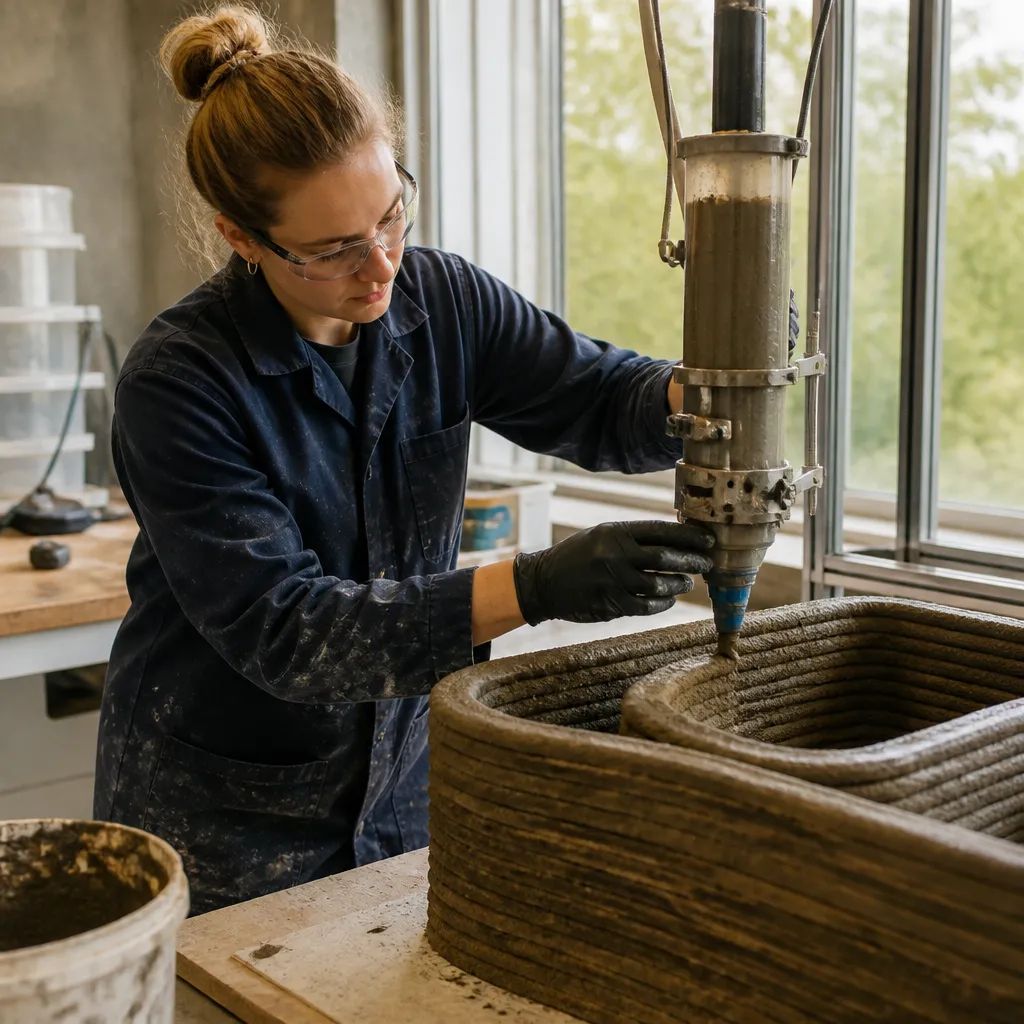
Bio-Welding and Dimensional Stability
A novel feature of this study is the bio-welding technique, where fresh composite paste reactivates the mycelium, enabling seamless integration of printed segments. However, the upscaled demonstrator faced challenges with dimensional stability, showing deformations of up to 22 percent during the drying process. The authors emphasize the need for further research to improve moisture regulation and mechanical properties of these materials before they can be widely adopted in construction.
Future Directions
While the study presents a promising workflow for creating mycelium composites using biomimetic designs, it underscores significant limitations, such as untested environmental durability and lack of recognition by building codes. Future work will focus on enhancing water regulation and conducting a more detailed mechanical analysis of these innovative materials, potentially paving the way for their use in interior partitions and insulation panels.